
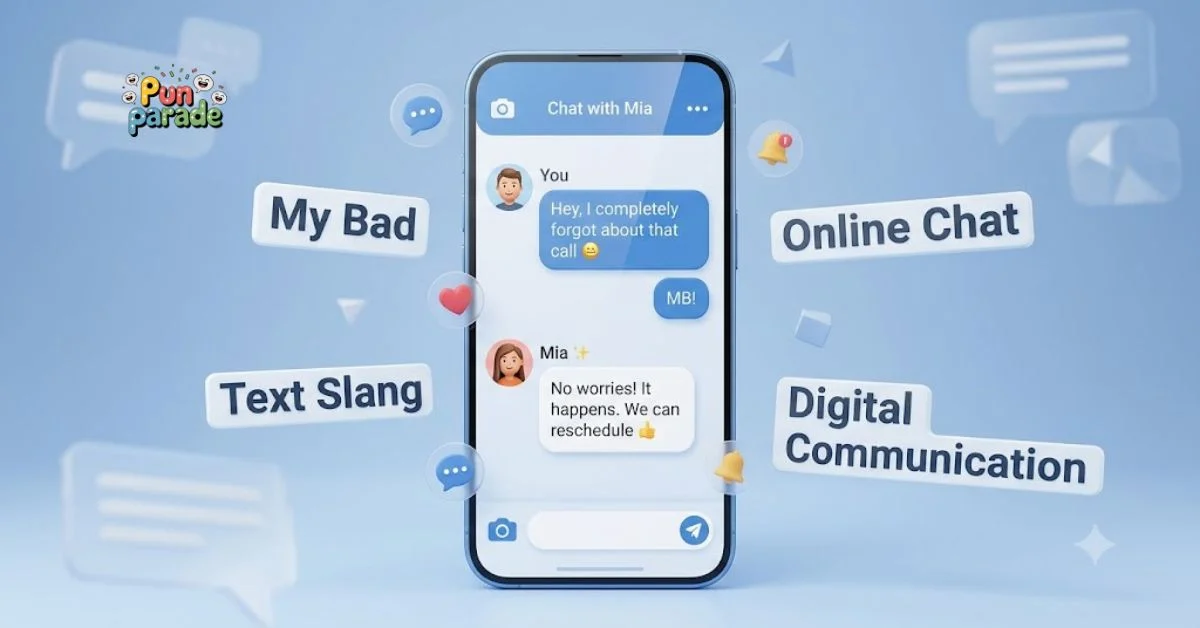
If you’ve ever received a text that simply says “mb”, you may have paused and wondered what it actually means. Is the sender apologizing? Do they mean “maybe”? Or could it stand for something completely different?
The truth is that MB has more than one meaning in text messages, and its definition depends on the conversation, the platform, and the relationship between the people chatting. On apps like WhatsApp, Instagram, Snapchat, and TikTok, abbreviations save time and make conversations feel more casual. However, they can also create confusion when the same letters have multiple interpretations.
In this guide, you’ll learn what MB means in text, where it came from, how people use it in everyday conversations, and how to understand its meaning based on context. You’ll also see realistic examples, common misunderstandings, and practical tips to help you reply confidently.
MB Meaning in Text – Quick Meaning
In most text conversations, MB stands for “My Bad.” It’s a casual way of saying “I’m sorry,” “That was my mistake,” or “I messed up.”
People usually use it when they want to admit a small mistake without making the conversation overly formal.
Quick meanings of MB
- My Bad (most common meaning)
- Maybe (less common, depending on context)
- Message Back (occasionally used in chats)
- My Brother (friendly slang among close friends)
Examples
“MB, I forgot to reply earlier.”
“Oops, mb! I sent the wrong photo.”
“MB, I thought the meeting was tomorrow.”
In almost every casual conversation, “My Bad” is the meaning people intend.
Origin & Background
The phrase “my bad” became popular in American English during the late 1970s and 1980s. It was commonly heard on basketball courts, where players admitted mistakes by saying, “My bad.”
Instead of offering a long apology, the phrase acknowledged responsibility in a quick and relaxed way. Over time, it spread beyond sports into everyday conversations.
As texting became more common in the late 1990s and early 2000s, people shortened “my bad” to simply “MB.” This matched the growing trend of using abbreviations like LOL, BRB, IDK, and TBH.
Today, MB appears across nearly every messaging platform. Whether someone misses a call, forgets to reply, or sends the wrong link, typing “mb” has become a fast and friendly way to apologize.
Social media has helped the abbreviation become even more common. Fast-moving conversations encourage short responses, making MB a natural fit for modern digital communication.
Related Posts: Thank You for Your Continued Support: Meaning, Best Uses, Examples, and Professional Responses
Real-Life Conversations
Seeing MB in real conversations makes its meaning much easier to understand. Here are a few realistic examples from different platforms.
1. WhatsApp Conversation
Person A: Did you forget about dinner tonight?
Person B: MB! I got stuck at work and completely lost track of time.
Person A: No worries. We can reschedule.
2. Instagram DM
Person A: You left me on read yesterday.
Person B: Mb 😅 I opened your message during class and forgot to reply later.
Person A: Haha, it happens.
3. TikTok Comments
Person A: You tagged the wrong creator.
Person B: MB! Fixed it now.
Person A: Thanks for updating it.
4. Text Message
Person A: I thought we were meeting at 5.
Person B: MB, I meant 6 PM. Sorry for the confusion.
Person A: Got it. See you then.
Emotional & Psychological Meaning
Although MB is only two letters, it often communicates more than a simple apology. It signals that the sender recognizes a mistake and wants to keep the conversation comfortable without turning the situation into unnecessary drama.
Using MB can make an apology feel lighter and more natural. Instead of writing a long explanation, people often choose this abbreviation to acknowledge what happened and move forward.
In close friendships, MB usually reflects honesty and familiarity. It tells the other person, “I know I messed up, and I’m owning it.”
In romantic relationships, it can help reduce tension after a small misunderstanding. However, repeatedly replying with only “MB” after bigger mistakes may seem dismissive or insincere.
A relatable scenario
Imagine you’re chatting with a close friend who asks for your opinion on an important decision. You accidentally forget to reply until the next morning. Instead of pretending nothing happened, you text:
“MB! I fell asleep before I could answer. Here’s what I think…”
That short apology immediately shows accountability and helps the conversation continue naturally.
Overall, MB reflects one of the biggest trends in modern communication: people value quick, honest acknowledgments that respect both time and emotions.
Usage in Different Contexts
The meaning and tone of MB can change depending on where it’s used and who you’re talking to.
Social Media
On platforms like Instagram, Snapchat, TikTok, and X, MB almost always means “My Bad.” People use it when they post incorrect information, tag the wrong account, or misunderstand a comment.
Example:
“MB, I replied to the wrong thread.”
Friends and Relationships
Among friends, MB is a casual way to admit a small mistake. It keeps conversations relaxed while showing responsibility.
Example:
“MB, I forgot your birthday was this weekend.”
In relationships, it’s suitable for minor issues like replying late or forgetting a plan. More serious situations usually deserve a fuller apology.
Work or Professional Settings
In professional communication, it’s better to avoid using MB.
Instead of saying:
“MB, I missed your email.”
A more professional response would be:
“I’m sorry for overlooking your email. Thank you for your patience.”
Using complete sentences shows professionalism and respect.
Casual vs. Serious Tone
Casual situations
- Forgetting to reply
- Sending the wrong meme
- Missing a call
- Sharing an incorrect link
- Arriving a few minutes late
Serious situations
Avoid using only MB when discussing:
- Financial mistakes
- Workplace issues
- Family conflicts
- Academic responsibilities
- Emotional disagreements
In these cases, a thoughtful apology is much more appropriate.
See Also: LGTM Meaning: What It Really Means in Chat, GitHub, Software, and Everyday Conversations
When NOT to Use It
Even though MB is common, there are situations where it may sound too casual or insensitive.
Avoid using MB when:
- Apologizing for something that seriously hurt someone.
- Speaking with teachers, managers, or clients.
- Writing formal emails or business messages.
- Discussing legal, medical, or financial matters.
- Communicating with people unfamiliar with internet slang.
Cultural differences also matter. Some people appreciate brief apologies, while others expect a more detailed explanation. If you’re unsure, writing a complete apology is the safer choice.
Using MB in the wrong context may unintentionally make it seem like you aren’t taking the situation seriously.
Common Misunderstandings
Because MB has several possible meanings, misunderstandings happen more often than many people realize.
1. Assuming It Always Means “Maybe”
Some people read MB as “maybe,” especially when the conversation involves plans or decisions.
Example:
“Are you coming tonight?”
“MB.”
Without context, the reply could be interpreted as either “maybe” or “my bad.”
2. Thinking It’s Always an Apology
Although “My Bad” is the most common meaning, MB can occasionally represent something entirely different depending on the community or platform.
Always consider the surrounding conversation before deciding what it means.
3. Confusing MB with MK
People sometimes mix up MB and MK because both are short texting abbreviations.
- MB usually means “My Bad.”
- MK generally means “Mmkay” or “Okay,” showing agreement or acknowledgment.
The letters may look similar, but they serve very different purposes in conversation.
Comparison Table
| Expression | Meaning | Tone | Best Used When |
|---|---|---|---|
| MB | My Bad | Casual, apologetic | Admitting a small mistake |
| Sorry | A direct apology | Neutral | Suitable in both casual and formal situations |
| Oops | I made a minor mistake | Playful | Small accidents or slip-ups |
| My Fault | I take responsibility | Honest, sincere | Accepting blame more directly |
| IDK | I Don’t Know | Casual | Expressing uncertainty |
| NVM | Never Mind | Casual | Dropping a topic or correcting yourself |
| TBH | To Be Honest | Honest, conversational | Sharing a genuine opinion |
| MK | Okay / Mmkay | Neutral | Acknowledging or agreeing with something |
Key Insight
While MB is one of the quickest ways to admit a minor mistake, it isn’t a replacement for a genuine apology in every situation. The closer your relationship and the smaller the mistake, the more natural “MB” tends to sound. When the issue is more serious, adding a sincere explanation shows greater respect and emotional awareness.
Variations and Related Meanings of MB
Although “My Bad” is the most common definition, MB can have other meanings depending on the conversation and platform.
1. My Bad
The most popular meaning, used to admit a small mistake or oversight.
2. Maybe
Some people shorten “maybe” to MB, though this usage is much less common and often depends on context.
3. Message Back
Occasionally used to ask someone to reply later.
Example: “MB when you’re free.”
4. My Brother
A friendly expression used among close friends, especially in gaming or online communities.
5. Birthday
In birthday-related chats, MB may appear as shorthand in personal notes or reminders, but it rarely means “birthday” by itself. Context is essential.
6. MB on Instagram
On Instagram, MB almost always means “My Bad,” especially in DMs, comments, or replies after a mistake.
7. MB in Relationships
Partners often use MB to apologize for small misunderstandings, forgotten messages, or minor disagreements. For bigger issues, a more thoughtful apology is usually expected.
8. MB in Gaming
Gamers frequently type MB after making an error during a match, such as choosing the wrong move or accidentally affecting their team’s performance.
9. MB in Group Chats
Friends use MB to quickly acknowledge sending the wrong message, tagging the wrong person, or forgetting shared plans.
10. MB as Casual Internet Slang
Across social media, MB has become part of everyday internet language because it’s short, friendly, and easy to understand.
How to Respond When Someone Uses MB
Your response depends on the situation and your relationship with the sender.
Casual Replies
- “No worries!”
- “You’re good.”
- “It happens.”
- “Don’t stress about it.”
- “All good.”
Funny Replies
- “I’ll let it slide this time. 😄”
- “Only because you admitted it!”
- “You owe me coffee now.”
- “Mistakes make life interesting.”
Mature Replies
- “Thanks for letting me know.”
- “I appreciate you owning the mistake.”
- “It’s okay. Let’s move forward.”
- “Thanks for clearing that up.”
Respectful Replies
- “No problem at all.”
- “Thank you for apologizing.”
- “I understand. It happens.”
- “Let’s not worry about it.”
Choosing a response that matches the situation helps keep the conversation positive and avoids unnecessary tension.
Read More: Tho Meaning in Chat: What It Really Means in Texts, Social Media & Everyday Conversations
Regional & Cultural Usage
The way people interpret MB can vary across cultures, age groups, and online communities.
Western Culture
In countries like the United States, Canada, and the United Kingdom, MB is widely understood as “My Bad.” It’s a normal part of casual texting and social media conversations, especially among younger users.
Asian Culture
In many Asian countries, English internet slang is popular among younger generations. However, not everyone recognizes MB immediately, so some people may ask for clarification if the context isn’t obvious.
Middle Eastern Culture
English abbreviations are common among bilingual internet users, but complete apologies are often preferred in more formal or respectful conversations. Because of this, MB is mostly limited to chats between friends.
Global Internet Usage
Gaming communities, online forums, and social media have made MB recognizable around the world. Even users whose first language isn’t English often understand it through repeated online exposure.
Gen Z vs. Millennials
Gen Z uses MB naturally in texting, gaming, and social media because short abbreviations fit fast-paced conversations.
Millennials also understand MB but may choose to write “my bad” or “sorry” instead, depending on the situation. Older generations are generally less familiar with the abbreviation and may appreciate a complete explanation.
Is It Safe for Kids?
Yes. MB is generally considered safe for children and teenagers because it usually means “My Bad.” It doesn’t contain offensive language or inappropriate content.
That said, parents and educators should encourage kids to understand context. Since MB can have different meanings in different conversations, it’s helpful to teach them not to assume every abbreviation means the same thing everywhere.
For school assignments, emails, or other formal communication, children should use complete words instead of internet slang.
FAQs
What does MB mean in text from a guy?
In most cases, when a guy texts “MB,” he means “My Bad.” It’s a casual way of admitting a mistake, apologizing for a small oversight, or acknowledging that he forgot something.
What does MB mean in text from a girl?
The meaning is generally the same. A girl who texts “MB” is usually saying “My Bad” to apologize or take responsibility for a minor mistake. The sender’s gender doesn’t change the meaning.
What does MB mean in a birthday text?
MB doesn’t normally mean “birthday.” If you see it in a birthday conversation, it most likely still means “My Bad,” such as apologizing for forgetting to send birthday wishes on time. Always rely on the surrounding context.
What does MB mean in slang?
In internet slang, MB most commonly stands for “My Bad.” It’s a quick, informal apology used in texting, gaming, social media, and everyday online conversations.
What does MB mean in a relationship?
In relationships, MB is often used to admit small mistakes, such as replying late, forgetting plans, or misunderstanding a message. While it’s suitable for minor issues, more meaningful situations usually deserve a sincere, full apology.
What does MB mean on Instagram?
On Instagram, MB almost always means “My Bad.” You’ll often see it in direct messages, comments, or replies when someone wants to acknowledge a small mistake or correct something they posted.
What does MK mean in text?
MK usually means “Mmkay” or simply “Okay.” Unlike MB, which expresses an apology, MK is used to show agreement, acknowledgment, or that someone understands the message.
Does MB mean maybe?
Sometimes, but it’s uncommon. While a few people use MB as shorthand for “maybe,” the far more common meaning in text messages is “My Bad.” If you’re unsure, read the surrounding conversation to determine the intended meaning.
What is MB in Gen Z slang?
In Gen Z slang, MB usually means “My Bad,” a casual way to admit a small mistake or apologize. It’s commonly used in texts, gaming, and social media conversations.
What does it mean when a girl says MB?
When a girl says MB, she almost always means “My Bad,” acknowledging a minor mistake or misunderstanding. The meaning is the same regardless of the sender’s gender.
What does MB stand for?
MB most commonly stands for “My Bad,” meaning “It’s my fault” or “I made a mistake.” Less commonly, it can mean “Maybe” or another phrase depending on the context.
What to reply to MB?
You can reply with “No worries,” “It’s okay,” “All good,” or “Don’t worry about it.” If the mistake was more serious, thank them for apologizing and continue the conversation respectfully.
Conclusion
Texting abbreviations continue to shape the way people communicate, and MB is one of the most common examples. Although it can occasionally have different meanings, it almost always stands for “My Bad,” a quick and friendly way to admit a small mistake or apologize without making the conversation feel overly formal.
The key to understanding MB is context. Consider the surrounding messages, your relationship with the sender, and the platform where the conversation is happening. In casual chats with friends, family, or coworkers, it’s usually a lighthearted acknowledgment of a minor error. In professional or more serious situations, however, a complete apology is often the better choice.
Now that you know what MB means in text, you’ll be able to recognize it confidently, use it appropriately, and respond naturally the next time it appears in your messages.
