
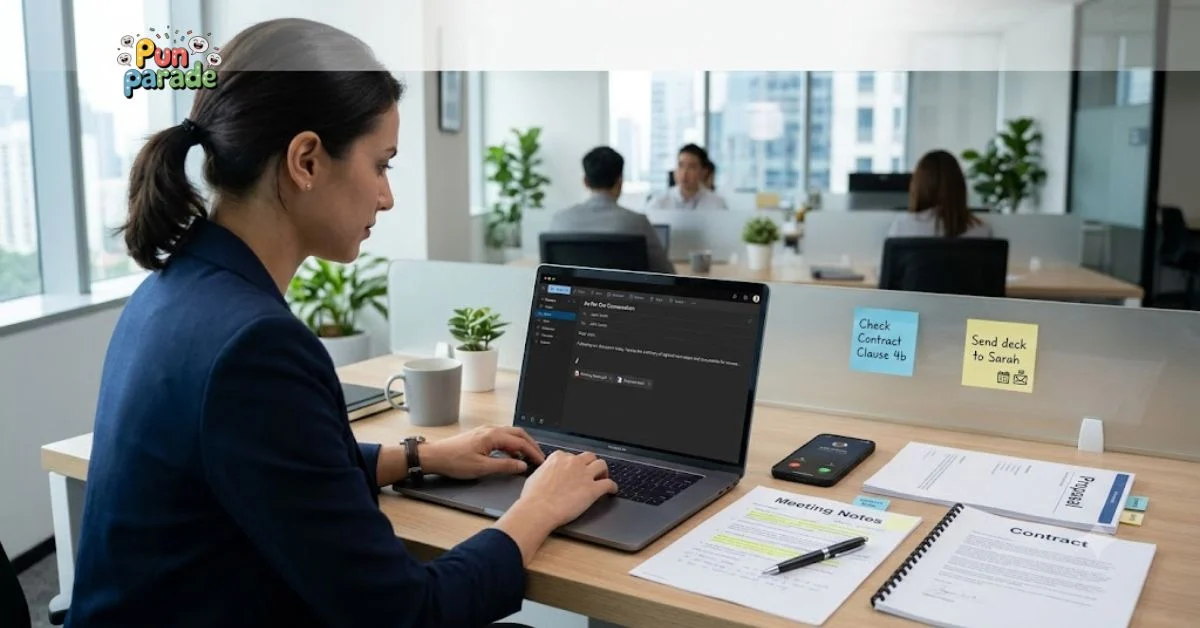
If you’ve ever received an email that begins with “As per our conversation”, you may have wondered exactly what the sender means. Is it simply a reminder, a formal way to continue a discussion, or something more?
The phrase “as per our conversation” is commonly used in business emails, workplace communication, and professional correspondence. It refers to something that was previously discussed, whether in person, over the phone, on WhatsApp, or during a meeting. By using this phrase, the writer connects the current message to an earlier conversation so everyone stays on the same page.
People often search for its meaning because they want to use it correctly in emails, understand its tone, or find better alternatives that sound more natural. In this guide, you’ll learn what it means, where it came from, when to use it, and how to write it professionally with real-life examples.
As Per Our Conversation – Quick Meaning
As per our conversation means “according to what we discussed earlier” or “following our previous discussion.”
It reminds the reader that the information in the message is based on an earlier conversation.
Simple definition
- Refers to a previous discussion.
- Common in professional emails and business communication.
- Helps confirm agreed actions or decisions.
- Creates a written record of verbal communication.
Examples
“As per our conversation, I’ll send the revised proposal today.”
“As per our conversation over the phone, your appointment has been confirmed.”
“As per our conversation, please review the attached document before Friday.”
Origin & Background
The phrase “as per” has long been part of formal English, especially in legal, administrative, and business writing. It originally meant “according to” or “following.”
Over time, professionals began combining it with “our conversation” to reference previous discussions. Before email became common, this wording frequently appeared in letters and official memos to document verbal agreements.
Today, digital communication has made the phrase even more widespread. Employees use it after Zoom meetings, phone calls, Microsoft Teams chats, WhatsApp conversations, and in-office discussions to create clarity and reduce misunderstandings.
Although younger professionals sometimes prefer alternatives like “Following up on our conversation” or “As discussed,” the original phrase remains a standard part of workplace communication around the world.
Social media hasn’t changed its meaning much, but it has introduced shorter versions. On platforms like LinkedIn, Slack, and workplace messaging apps, people often write:
- “As discussed…”
- “Following our chat…”
- “Per our conversation…”
- “Based on our discussion…”
These alternatives sound slightly more conversational while keeping the same meaning.
Related Posts: Tho Meaning in Chat: What It Really Means in Texts, Social Media & Everyday Conversations
Real-Life Conversations
Seeing “as per our conversation” in context makes it much easier to understand. Here are realistic examples from everyday digital communication.
1. As Per Our Conversation on WhatsApp
Person A: Thanks for explaining the project timeline on WhatsApp.
Person B: You’re welcome. As per our conversation on WhatsApp, I’ll share the updated schedule before 5 PM today.
2. Instagram DM
Person A: Can you send me the collaboration details?
Person B: Sure! As per our conversation earlier, I’ve emailed the media kit and pricing information.
3. TikTok Comments
Person A: I couldn’t find the product link you mentioned.
Person B: As per our conversation in the comments yesterday, I’ve added the link to my profile bio.
4. Text Message
Person A: Did we finalize the meeting for Thursday?
Person B: Yes. As per our conversation over the phone earlier, we’re meeting at 10:00 AM in the conference room.
Emotional & Psychological Meaning
Although “as per our conversation” sounds formal, it serves an important emotional purpose. It reassures both parties that they share the same understanding of what was discussed.
In professional settings, people often worry about forgotten details or misunderstandings. This phrase reduces uncertainty by connecting the current message to an earlier agreement. It communicates organization, accountability, and respect for clear communication.
From a psychological perspective, it also reinforces trust. When someone summarizes a previous discussion in writing, everyone has a clear reference point. This minimizes confusion and helps prevent disputes about what was agreed upon.
For example, after discussing a client project over the phone, I once followed up with an email beginning, “As per our conversation, I’ll deliver the first draft by Wednesday.” The client appreciated having everything confirmed in writing, and it eliminated any uncertainty about the deadline.
Usage in Different Contexts
Social Media
While uncommon in casual posts, the phrase appears in professional networking platforms like LinkedIn or in business-related direct messages.
Example:
“As per our conversation, I’ve shared the presentation link.”
Friends & Relationships
Among friends, the phrase can sound overly formal unless it’s used humorously.
Instead of saying:
“As per our conversation, we’re meeting at 7 PM.”
Most people simply say:
“Like we talked about, see you at 7!”
Work & Professional Settings
This is where the phrase is most effective. It documents previous conversations and keeps projects organized.
Examples include:
- Client follow-up emails
- Meeting summaries
- HR communication
- Vendor discussions
- Project management updates
- Customer support messages
It is especially useful when confirming deadlines, responsibilities, pricing, approvals, or agreed next steps.
Casual vs. Serious Tone
Casual
- Like we discussed…
- As we talked about…
- Following our chat…
Professional
- As per our conversation…
- As discussed during today’s meeting…
- Following our telephone conversation…
- Based on our earlier discussion…
The more formal the setting, the more appropriate “as per our conversation” becomes. In everyday conversations with family or close friends, a simpler phrase usually feels warmer and more natural.
See Also: LGTM Meaning: What It Really Means in Chat, GitHub, Software, and Everyday Conversations
When Not to Use It
Although “as per our conversation” is professional and widely accepted, it is not appropriate in every situation. Using it in the wrong context can make your message sound stiff, repetitive, or even confusing.
1. When There Was No Previous Conversation
Never use the phrase if you haven’t actually spoken with the recipient. It assumes a prior discussion and may confuse the reader.
Incorrect:
“As per our conversation, here is the proposal.”
(There was no conversation.)
Better:
“Please find the proposal attached for your review.”
2. In Casual Chats with Friends
The phrase sounds too formal in everyday conversations.
Instead of:
“As per our conversation, let’s meet at the café.”
Say:
“Like we discussed, let’s meet at the café.”
3. When It Sounds Like You’re Blaming Someone
Sometimes people use this phrase to prove they were right or to remind someone of a promise. That can make the message feel defensive.
Instead of writing:
“As per our conversation, you agreed to finish the work yesterday.”
Try:
“Just following up on our discussion. Could you let me know the status of the project?”
4. Repeating It in Every Email
If every email starts with “As per our conversation,” your writing becomes repetitive.
Mix it with alternatives such as:
- As discussed
- Following our meeting
- Based on our discussion
- Further to our conversation
- As agreed
Common Misunderstandings
Many English learners—and even native speakers—misunderstand how this phrase should be used.
It Doesn’t Mean “Because Of”
Some people think it means because of our conversation, but it actually means according to or following what was discussed.
It Doesn’t Confirm Agreement Automatically
Using the phrase doesn’t prove that both people agreed. It simply refers to an earlier conversation.
If agreement matters, write:
“As per our conversation, we agreed to launch the campaign on Monday.”
It Isn’t Always the Most Natural Choice
Modern business writing often favors shorter expressions.
For example:
- As discussed…
- Following our call…
- Thanks for speaking with me today…
- As agreed…
These alternatives often sound friendlier while remaining professional.
It Can Be Too Formal
In relaxed workplaces or startup environments, “as per our conversation” may feel old-fashioned. Choosing a more conversational alternative can make your communication sound warmer and more approachable.
Comparison Table
| Expression | Meaning | Typical Use | Tone |
|---|---|---|---|
| As per our conversation | According to our previous discussion | Business emails | Formal |
| As discussed | Refers to something already talked about | Meetings, emails | Professional |
| Following our conversation | Continues an earlier discussion | Email follow-ups | Friendly professional |
| Based on our discussion | Built on previous ideas | Reports, proposals | Professional |
| Per our conversation | Shortened version | Internal communication | Formal |
| Like we talked about | References a previous chat | Friends, colleagues | Casual |
| As agreed | Confirms a mutual agreement | Contracts, work emails | Formal |
| Out of the blue | Without prior discussion | Everyday conversation | Informal |
Key Insight
The biggest difference is tone. “As per our conversation” is ideal when you want to document a previous discussion in a professional setting. If your goal is to sound warmer or more conversational, phrases like “As discussed” or “Following our conversation” often feel more natural while conveying the same idea.
Variations / Types
Here are some of the most common variations you’ll encounter in emails and workplace communication.
1. As per our conversation meaning
A phrase that refers to something discussed previously and confirms that the current message relates to that discussion.
2. As per our conversation earlier
Used when referring to a conversation that happened earlier the same day or recently.
3. As per our conversation over the phone earlier
Specifically references a telephone discussion to confirm what was talked about.
4. As per our telephone conversation, please find attached
A common email opening used when sending files that were requested during a phone call.
5. As per our conversation, please find attached
Used when attaching documents, reports, invoices, contracts, or presentations discussed previously.
6. As per our conversation in email
Refers back to an earlier email exchange rather than a spoken discussion.
7. As per our conversation on WhatsApp
Confirms information that was originally discussed in a WhatsApp chat before moving it into a formal email.
8. As per our conversation example
A search phrase people use when looking for sample sentences demonstrating proper usage.
9. Per our conversation
A shorter version commonly used in North American business communication.
10. Following our conversation
A modern, friendly alternative that feels slightly less formal while maintaining the same meaning.
How to Respond When Someone Uses “As Per Our Conversation”
When someone begins an email or message with “As per our conversation,” they’re usually referring to something you’ve already discussed. A good response should acknowledge the earlier conversation and, if needed, confirm the next steps.
Casual Replies
- “Sounds good. I’ll take care of it today.”
- “Thanks for the reminder. I’ll send it shortly.”
- “Yes, that’s exactly what we discussed.”
- “I appreciate the follow-up.”
Funny Replies
- “Good thing you put it in writing—I almost forgot!”
- “Now it’s officially documented!”
- “Looks like our conversation has become evidence!”
- “Thanks! My future self will appreciate the reminder.”
Mature Replies
- “Thank you for confirming our discussion. I’ll proceed accordingly.”
- “I appreciate the summary. Everything looks accurate.”
- “Thanks for following up. I’ll complete the agreed tasks by the deadline.”
- “That matches my understanding as well.”
Respectful Replies
- “Thank you for the clarification.”
- “I confirm the details discussed.”
- “I’ve received the attachment and will review it today.”
- “Thank you for documenting our conversation.”
Read More: Thank You for Your Continued Support: Meaning, Best Uses, Examples, and Professional Responses
Regional & Cultural Usage
The phrase “as per our conversation” is understood in many English-speaking environments, but its popularity and tone vary across cultures.
Western Culture
In countries such as the United States, Canada, the United Kingdom, and Australia, the phrase is common in formal business communication.
However, many professionals now prefer shorter alternatives like:
- As discussed
- Following our conversation
- Thanks for speaking with me today
These sound more conversational while remaining professional.
Asian Culture
In many Asian workplaces, especially where English is used as a business language, “as per our conversation” remains very popular.
It reflects professionalism, respect, and attention to detail. Employees often use it when communicating with clients, managers, and international partners.
Middle Eastern Culture
Business professionals across the Middle East frequently use this phrase in English emails to create a clear written record of verbal agreements.
Because business etiquette often values respectful and formal language, the phrase fits naturally into professional communication.
Global Internet Usage
Remote work has made the phrase even more common.
People now use it after:
- Zoom meetings
- Microsoft Teams calls
- Google Meet sessions
- WhatsApp chats
- Slack conversations
- Video conferences
It helps move verbal discussions into written documentation that everyone can reference later.
Gen Z vs. Millennials
Gen Z
Younger professionals generally prefer simpler, friendlier wording.
Examples include:
- As discussed
- Following our chat
- Thanks for talking today
- Just confirming what we discussed
Millennials
Millennials often use both traditional and modern expressions depending on the workplace. Many corporate environments still favor “as per our conversation,” while startups and creative industries lean toward more conversational alternatives.
Overall, the meaning stays the same—the main difference is tone.
Is It Safe for Kids?
Yes. “As per our conversation” is a neutral and professional expression with no offensive, inappropriate, or hidden meaning.
Children are unlikely to use it in everyday conversation because it belongs mainly to business and formal communication. However, learning the phrase can help students write more professional emails and understand workplace English as they grow older.
Frequently Asked Questions
1. What does “as per our conversation” mean?
It means “according to what we discussed earlier” or “following our previous conversation.” It’s commonly used to connect a current message to an earlier discussion.
2. Is “as per our conversation” grammatically correct?
Yes. It is grammatically correct and widely accepted in professional English, especially in emails, business letters, and workplace communication.
3. Can I say “as per our conversation over the phone earlier”?
Yes. This is a common and professional way to refer specifically to a previous telephone conversation before discussing the next steps.
4. How do I use “as per our conversation, please find attached”?
Use it when sending a document that was discussed previously.
Example:
“As per our conversation, please find the signed contract attached for your review.”
5. Is “as per our conversation” too formal?
It depends on the situation. In corporate settings, it sounds professional and appropriate. In casual conversations or relaxed workplaces, alternatives like “As discussed” or “Following our conversation” may feel more natural.
6. Can I use “as per our conversation” in an email?
Absolutely. It is one of the most common phrases for professional email follow-ups because it provides context and confirms previous discussions.
7. What are some alternatives to “as per our conversation”?
Popular alternatives include:
- As discussed
- Following our conversation
- Based on our discussion
- As agreed
- Per our conversation
- Following up on our discussion
Is it correct to say “as per our conversation”?
Yes, it’s grammatically correct and widely used in professional emails to refer to a previous discussion. It helps connect your current message with what was already discussed.
What can I say instead of “per our conversation”?
You can say “As discussed,” “Following our conversation,” “As agreed,” or “Based on our discussion.” These alternatives sound natural while conveying the same meaning.
How do we write an email as per our conversation?
Start with a sentence like, “As per our conversation, please find the attached report for your review.” Then briefly summarize the agreed points and mention any next steps or deadlines.
What does the phrase “per our conversation” mean?
“Per our conversation” means “according to what we discussed earlier.” It’s commonly used to reference a previous phone call, meeting, or discussion in professional communication.
Conclusion
“As per our conversation” is a simple yet effective phrase that links your current message to a previous discussion. Whether you’re following up after a phone call, confirming a WhatsApp chat, sending an attachment, or summarizing a meeting, it helps create clarity and keeps everyone aligned.
While it remains a trusted choice in professional communication, it’s worth remembering that modern business writing often favors shorter, friendlier alternatives such as “As discussed” or “Following our conversation.” Choosing the right expression depends on your audience, your relationship with the recipient, and the level of formality you want to convey.
Used thoughtfully, this phrase demonstrates professionalism, improves communication, and reduces misunderstandings. Once you understand its meaning and context, you can use it confidently in emails, messages, and workplace conversations.
