
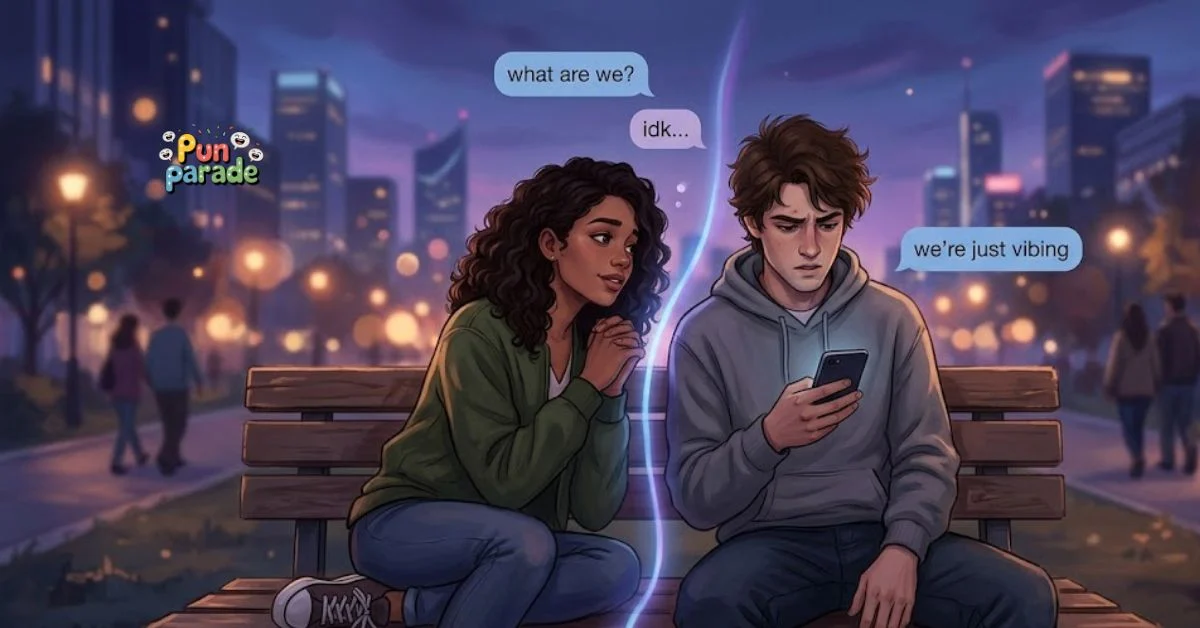
The term situationship meaning has become one of the most searched relationship concepts in modern communication. People use it when they feel emotionally connected to someone, but there is no clear label like “relationship” or “dating.”
It usually describes a space between friendship and commitment—where emotions exist, time is shared, but clarity is missing. That uncertainty is exactly why people search for its meaning.
In today’s digital world, relationships are no longer black and white. Social media, texting culture, and emotional hesitation have created situations where two people are “almost together” but not officially a couple.
This article breaks down the full meaning of situationship, its psychology, real-life usage, and how it differs from a real relationship—so you can clearly understand where you stand.
Situationship Meaning – Quick Definition
A situationship is an undefined romantic or emotional connection between two people where:
- There is emotional or physical intimacy
- There is no clear label or commitment
- The future of the relationship is uncertain
- Both people “act like a couple” without saying it officially
Simple Definition:
A situationship is a relationship without definition.
Examples:
- “We talk every day, but we are not dating… it’s just a situationship.”
- “It feels like love, but there is no commitment.”
- “We act like partners, but we never defined anything.”
Situationship Meaning in Urdu:
“Aisi taluqaat jo dosti aur mohabbat ke darmiyan hon lekin un ka koi wazeh naam ya waada na ho.”
Origin & Background
The term situationship became popular in the early 2010s, especially through social media platforms like Twitter, Instagram, and TikTok. However, the concept itself existed long before the word was created.
Earlier generations called it:
- “Almost relationship”
- “Undefined dating”
- “We are just talking”
With the rise of modern dating apps, emotional availability changed. People started connecting faster but committing slower.
Cultural shifts also played a major role:
- Fear of commitment increased
- Emotional independence became valued
- Casual dating became normal
- Labels started feeling “restrictive”
As a result, situationship became a natural label for modern emotional confusion.
Related Posts: PDA Meaning Slang: What It Really Means in Modern Conversations
Real-Life Conversations (MANDATORY)
💬 WhatsApp Chat
Person A: Are we together or what?
Person B: I really like you, but I’m not ready for a relationship.
Person A: So what are we then?
Person B: I guess… we’re just in a situationship.
💬 Instagram DM
Person A: People keep asking if you’re my boyfriend. What should I say?
Person B: Just say we’re vibing 😂
Person A: That sounds like a situationship
Person B: Maybe it is… but I like it like this.
💬 TikTok Comment Thread
User 1: “If you’re confused, it’s a situationship.”
User 2: “Why is this so accurate 😭 I’ve been in one for 8 months”
User 3: “No label but full emotions = situationship”
💬 Text Message
Person A: Do you see a future with us?
Person B: I don’t know yet… I just enjoy what we have right now.
Person A: That sounds like a situationship to me.
Emotional & Psychological Meaning
From a psychological perspective, a situationship reflects emotional uncertainty. It often happens when:
- One or both people fear commitment
- Emotional availability is inconsistent
- Past relationship trauma exists
- The connection feels “good enough” without definition
What it emotionally represents:
- Confusion
- Hope
- Attachment without security
- Fear of losing someone vs fear of committing
In modern communication psychology, situationships are often a result of “delayed clarity”—where emotions grow faster than decisions.
Real-life scenario:
A person meets someone who feels perfect in conversations. They spend time together, share personal thoughts, and even act like a couple. But every time the topic of commitment comes up, it is avoided.
So the relationship stays in a loop of “almost but not official.”
That emotional in-between space is what defines a situationship.
Usage in Different Contexts
1. Social Media
Used in memes, captions, and viral posts:
- “Me explaining my situationship to my friends for the 100th time.”
2. Friends & Relationships
Used when describing unclear romantic connections:
- “We’re not dating, it’s just a situationship.”
3. Work / Professional Settings
Rarely used, but may appear in casual workplace conversations:
- “They’re always together, must be a situationship.”
4. Casual vs Serious Tone
- Casual: humorous, light, meme-like
- Serious: emotional confusion, relationship uncertainty
See Also: ASF Meaning in Text: Full Guide to Slang, Uses, and Real-Life Contexts (2026 Edition)
When NOT to Use It
Even though it is widely used, situationship should be avoided in:
- Formal communication
- Professional emails or workplace discussions
- Sensitive emotional conversations where clarity is needed
- Situations involving commitment decisions (it can create confusion)
It can also emotionally hurt someone if used jokingly in serious relationships.
Common Misunderstandings
Many people misunderstand situationship as:
1. “Just friendship”
Not true. It usually includes romantic or emotional tension.
2. “Casual dating only”
Sometimes it is more emotional than casual dating.
3. “No feelings involved”
Incorrect. Situationships often involve strong emotions.
4. “Temporary phase only”
Not always. Some situationships last months or even years.
Comparison Table
| Term | Meaning | Emotional Depth | Commitment |
|---|---|---|---|
| Situationship | Undefined romantic connection | Medium to high | None |
| Relationship | Defined romantic bond | High | Mutual commitment |
| Friendship | Non-romantic bond | Low to medium | None |
| Talking Stage | Early connection phase | Low to medium | Not defined |
| Casual Dating | Light romantic interaction | Medium | Low |
Key Insight:
A situationship feels like a relationship emotionally, but behaves like uncertainty structurally. That gap creates confusion and attachment at the same time.
Variations / Types of Situationships
- Emotional Situationship
Deep emotional bond without physical commitment. - Physical Situationship
Physical connection without emotional clarity. - One-sided Situationship
One person is more emotionally invested. - Long-term Situationship
Lasts for months or years without definition. - On-off Situationship
Repeated cycles of closeness and distance. - Digital Situationship
Mostly exists through chats and social media. - Secret Situationship
Hidden from friends or family. - Confused Situationship
Both people are unsure about direction. - Comfort-based Situationship
Stays because it feels familiar and safe. - Exploratory Situationship
Used to understand compatibility before commitment.
How to Respond When Someone Uses It
😊 Casual Replies
- “Sounds like modern love 😄”
- “That’s a tricky situation!”
😄 Funny Replies
- “So basically relationship beta version 😂”
- “Love 2.0 loading…”
🧠 Mature Replies
- “Do you feel comfortable with the uncertainty?”
- “Maybe clarity would help both of you.”
💬 Respectful Replies
- “As long as you’re okay emotionally, that matters most.”
- “Make sure your feelings are not getting hurt in the process.”
Read More: I Am Not Feeling Well Meaning, Usage & Real-Life Messages You Can Use in Daily Life
Regional & Cultural Usage
Western Culture
Very commonly used in dating culture. Seen as normal part of modern relationships.
Asian Culture
Often misunderstood or hidden due to traditional expectations around commitment.
Middle Eastern Culture
Less openly discussed, but exists in private social interactions.
Global Internet Usage
Popularized through TikTok, Instagram reels, and memes.
Gen Z vs Millennials
- Gen Z: Uses it casually and humorously
- Millennials: Often see it as emotional confusion or “wasted time”
Is It Safe for Kids?
The term itself is not harmful, but it belongs to adult emotional and romantic contexts. Younger audiences may misunderstand it as simple friendship, which can create confusion.
It is better suited for mature understanding of relationships and emotional boundaries.
FAQs
1. What is situationship meaning?
A situationship is an undefined romantic connection without clear commitment or labels.
2. Is situationship a real relationship?
No, it exists between friendship and a committed relationship.
3. Why do situationships happen?
They happen due to emotional uncertainty, fear of commitment, or unclear communication.
4. Can situationships turn into relationships?
Yes, if both people decide to define and commit.
5. What is situationship meaning in Urdu?
It means an emotional connection without a clear relationship label or commitment.
6. Is situationship healthy?
It depends on emotional boundaries and whether both people are comfortable.
7. How long do situationships last?
They can last weeks, months, or even years depending on emotional clarity.
What exactly is a situationship?
A situationship is an undefined romantic connection without clear commitment or labels. It sits between dating and friendship, where emotions exist but clarity doesn’t.
Is a situationship a hookup?
No, a hookup is usually physical and short-term, while a situationship is more emotional and ongoing. It often includes talking, bonding, and feelings without defining the relationship.
Is a situationship toxic?
It can be toxic if one person wants commitment while the other avoids clarity. But it is not always toxic if both people are emotionally comfortable with it.
What is a red flag in a situationship?
Avoiding labels, inconsistent communication, and mixed signals are major red flags. If your emotional needs are ignored or unclear, it usually becomes unhealthy.
Conclusion
A situationship reflects modern relationships where emotions are real but definitions are missing. It exists in the space between connection and commitment, often shaped by fear, timing, and uncertainty.
Understanding its meaning helps you identify your emotional position more clearly. Whether it leads to love or ends in clarity, awareness is the first step toward healthier communication.
In today’s world, knowing what you are in emotionally is just as important as knowing who you are with.
