
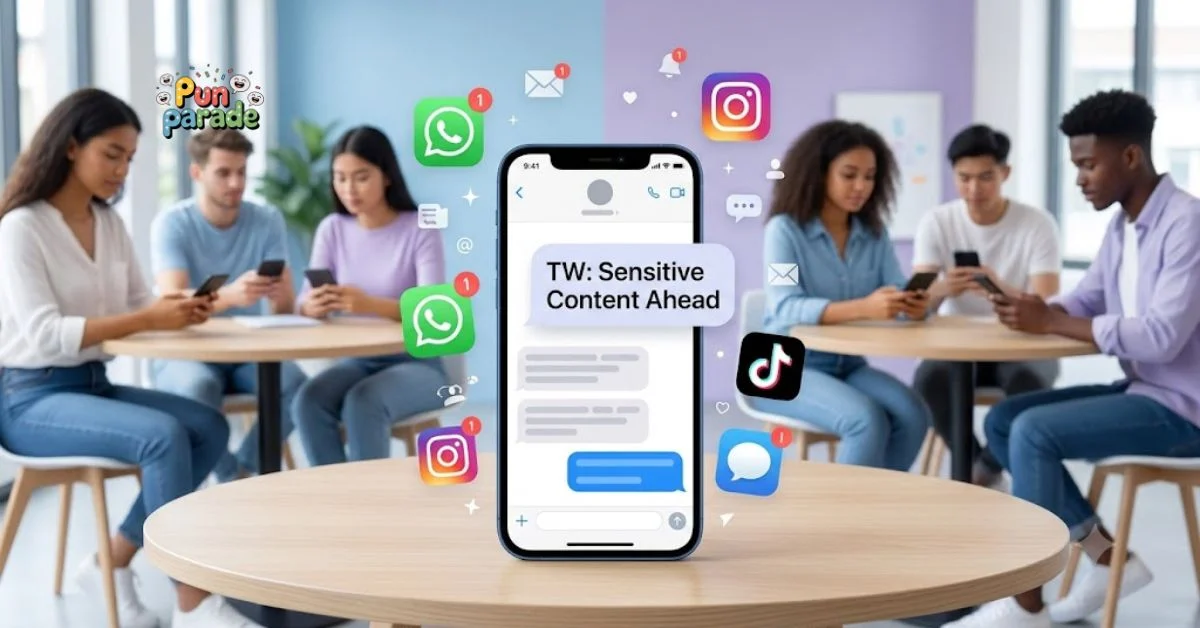
If you’ve seen “TW” in a text message, WhatsApp chat, Instagram caption, or TikTok comment, you may have wondered what it actually means. The answer isn’t always straightforward because TW has more than one meaning, and its interpretation depends on the conversation.
For many people, TW stands for Trigger Warning, a notice that sensitive content is about to follow. However, on social media and in casual texting, some users give it different meanings or misunderstand it entirely. That’s why searches like “TW meaning in text WhatsApp,” “TW meaning in Instagram,” and “TW meaning not trigger warning” have become increasingly common.
In this guide, you’ll learn what TW means in different situations, how Gen Z uses it online, when you should use it yourself, and how to avoid common misunderstandings.
TW Meaning in Text – Quick Meaning
In most online conversations, TW means Trigger Warning. It alerts readers that the next message, image, or video may contain topics that some people find emotionally upsetting.
Quick definition
- Full form: Trigger Warning
- Common platforms: WhatsApp, Instagram, TikTok, X (Twitter), Reddit, Discord
- Purpose: Give people a chance to prepare for sensitive content or skip it.
Examples
“TW: Graphic accident photos ahead.”
“TW: Discussion about anxiety and depression.”
“TW: Mentions of violence.”
Can TW mean something else?
Yes. Although Trigger Warning is by far the most common meaning, some people mistakenly use or interpret TW as:
- Trigger Warning (most common)
- Content Warning (used similarly, often written as CW instead)
- Team Work (rare in office chats)
- Text abbreviation with a personal meaning between friends
Always read the surrounding conversation before deciding what TW means.
Origin & Background
The phrase Trigger Warning first appeared in online support communities where people discussed traumatic experiences. Members wanted a simple way to warn others before mentioning subjects that could bring back painful memories.
Over time, the abbreviation TW spread far beyond mental health communities.
Social media accelerated its popularity. Platforms like Tumblr helped popularize the term, and later it became common on Instagram, TikTok, Reddit, and X. Today, creators often place TW at the beginning of captions, videos, or comments discussing topics such as abuse, violence, eating disorders, grief, or self-harm.
As internet culture evolved, younger users adopted TW as part of everyday online etiquette. Instead of being limited to serious discussions, it’s now frequently used before emotional stories or disturbing news.
In some communities, however, people use TW jokingly or sarcastically. That casual use sometimes creates confusion, especially for users who expect it to signal genuinely sensitive content.
Real-Life Conversations
WhatsApp Conversation
Person A: TW: Today’s news includes a serious road accident.
Person B: Thanks for the warning. I’ll read it later when I’m feeling ready.
Instagram DM
Person A: TW: I’m going to talk about my anxiety journey.
Person B: I appreciate you letting everyone know beforehand.
TikTok Comments
Person A: TW: Flashing lights and loud sounds.
Person B: Thanks! I have migraines, so that really helps.
Text Message
Person A: TW: This story mentions bullying from high school.
Person B: Thanks for telling me first. Go ahead whenever you’re comfortable.
Related Posts: You Got This: Meaning, Origin, Examples, and How to Use It with Confidence
Emotional & Psychological Meaning
Although TW is only two letters long, it carries an important emotional purpose.
It tells readers, “Take care of yourself before reading what’s next.”
Rather than censoring conversations, it gives people the freedom to decide whether they’re emotionally prepared to continue. This small act can show empathy, respect, and awareness of other people’s experiences.
Many people use TW because they understand that everyone processes difficult topics differently. A story that feels ordinary to one person may remind someone else of a painful experience.
I’ve noticed that conversations often become more respectful when people include a simple trigger warning before discussing sensitive subjects. It doesn’t stop honest discussions—it simply gives others a moment to prepare.
For Gen Z especially, using TW has become part of good digital communication. It reflects consideration rather than weakness and encourages healthier online interactions.
Usage in Different Contexts
The meaning of TW stays largely the same across platforms, but how people use it can vary depending on the audience and situation.
Social Media
On Instagram, TikTok, X, and Reddit, TW usually appears at the beginning of a caption, comment, or video description. It lets viewers know the content may include sensitive topics before they continue.
Example:
“TW: Blood and medical procedures.”
“TW: Discussion about grief.”
Many creators also place the warning directly on the first screen of a video so viewers can decide whether to keep watching.
Friends & Relationships
Friends often use TW before sharing personal stories involving heartbreak, family problems, anxiety, or traumatic memories.
Example:
“TW: I need to talk about something that happened during my childhood.”
Using TW in private conversations can show care and emotional awareness, especially when you know someone has experienced similar situations.
Work & Professional Settings
In workplaces, TW is less common but can still be appropriate in presentations, workshops, training sessions, or educational materials covering difficult subjects.
For example:
- Mental health seminars
- Crime or legal case studies
- Medical education
- Journalism training
Professional environments usually prefer a clear phrase like “Content Warning” or “Trigger Warning” instead of only writing TW, since not everyone recognizes the abbreviation.
Casual vs. Serious Tone
Most uses of TW are serious because they prepare readers for emotionally difficult content.
However, some people jokingly write things like:
“TW: Monday mornings.”
“TW: Homework.”
These humorous examples are usually harmless among friends, but they can reduce the seriousness of the term if overused.
When NOT to Use It
Although TW is helpful, it isn’t necessary in every conversation.
Avoid using it in these situations:
Everyday Topics
Normal discussions about food, travel, sports, or shopping don’t require a trigger warning.
As a Joke Around Sensitive Audiences
Making fun of trigger warnings around people discussing real trauma may come across as insensitive.
To Gain Attention
Adding TW simply to attract clicks or increase engagement can frustrate readers and reduce trust.
Without Context
Writing only “TW” without explaining what follows leaves readers confused.
Better examples include:
- TW: Violence
- TW: Eating disorder discussion
- TW: Pregnancy loss
- TW: Graphic injury
Specific warnings help readers make informed decisions.
Common Misunderstandings
Because TW has become popular online, several misunderstandings have developed.
Mistaking TW for Another Slang
Some users think TW has a hidden Gen Z meaning unrelated to trigger warnings. In reality, most online uses still refer to Trigger Warning.
Assuming Everyone Knows It
Not every internet user understands abbreviations.
Older users or people new to social media may appreciate seeing the full phrase instead.
Thinking TW Means the Content Is Dangerous
A trigger warning doesn’t mean the content is harmful.
It simply signals that the material may be emotionally difficult for some individuals.
Believing It’s Required Everywhere
Using TW is generally considered polite rather than mandatory.
Different communities have different expectations, so it’s best to follow the norms of the platform or group.
Comparison Table
| Expression | Meaning | When It’s Used |
|---|---|---|
| TW | Trigger Warning | Before sensitive or potentially upsetting content |
| CW | Content Warning | Before mature, graphic, or disturbing material |
| FYI | For Your Information | Sharing useful information without warning |
| NSFW | Not Safe For Work | Adult or explicit content unsuitable for workplaces |
| Spoiler | Reveals story details | Before discussing movies, books, or games |
| Heads Up | Friendly warning | Informal notice about something important |
| Note | Additional information | Adds clarification without emotional context |
| PSA | Public Service Announcement | Important public information or advice |
Key Insight
The biggest difference is that TW focuses on emotional preparedness, while abbreviations like FYI or Heads Up simply provide information. Understanding this distinction helps you communicate more thoughtfully, especially in online communities where context matters.
See Also: Thank-You Responses: The Best Ways to Reply to “Thank You” in Any Situation
Variations and Types of TW (Minimum 10)
While TW most commonly means Trigger Warning, you’ll also see related abbreviations and similar warning labels across different online platforms.
1. TW: Violence
Warns readers that the upcoming content includes physical violence or graphic descriptions.
2. TW: Blood
Used before images or discussions involving blood, injuries, or medical procedures.
3. TW: Death
Appears before conversations about death, loss, funerals, or grieving.
4. TW: Suicide
Alerts readers that the content discusses suicide or suicidal thoughts.
5. TW: Abuse
Used for stories involving physical, emotional, verbal, or sexual abuse.
6. TW: Eating Disorders
Warns about discussions related to anorexia, bulimia, bing’e eating, or body image struggles.
7. TW: Self-Harm
Placed before content mentioning self-harm or recovery experiences.
8. TW: Mental Health
Signals topics involving anxiety, depression, PTSD, panic attacks, or similar mental health discussions.
9. CW (Content Warning)
A closely related abbreviation that warns about mature, disturbing, or graphic content without specifically referring to trauma.
10. Spoiler Warning
Although not a trigger warning, it’s another type of online notice that prepares readers before revealing important story details.
Note: Searches for “TW meaning not trigger warning” are becoming more common because some users assume TW has a secret Gen Z slang meaning. In reality, Trigger Warning remains the standard and most widely accepted definition across social media.
How to Respond When Someone Uses TW
The best response depends on your relationship with the person and the type of content they’re sharing.
Casual Replies
- “Thanks for the heads-up.”
- “I appreciate the warning.”
- “I’ll read it when I have a moment.”
- “Good to know before I continue.”
Funny Replies
Only use humor if the topic itself is light-hearted.
- “Thanks—you saved me from scrolling too fast!”
- “Warning received!”
- “I’ll mentally prepare myself first.”
Avoid joking if the content involves real trauma or serious emotional experiences.
Mature Replies
- “Thank you for letting everyone know.”
- “I appreciate your consideration.”
- “Take your time sharing your story.”
- “I’m here if you want to talk.”
Respectful Replies
- “Thanks for thinking about your audience.”
- “I appreciate the context.”
- “I’ll continue when I’m ready.”
- “Thank you for being considerate.”
Regional & Cultural Usage
Although TW is recognized worldwide, people don’t always use it in exactly the same way.
Western Culture
In North America, the UK, Australia, and many European countries, TW is widely used on social media, in universities, online communities, and mental health discussions. Most internet users immediately recognize it as Trigger Warning.
Asian Culture
Across many Asian countries, TW is becoming more familiar thanks to TikTok, Instagram, YouTube, and global online communities. However, many users still prefer writing “Trigger Warning” in full, especially in educational or professional settings.
Middle Eastern Culture
Usage is increasing among younger internet users, particularly those active on English-language social media. In everyday conversations, though, many people are still more familiar with the full phrase than the abbreviation.
Global Internet Usage
Platforms like TikTok, Reddit, Discord, Instagram, and X have helped make TW part of global internet culture. Even users from different countries often understand its purpose because they encounter it regularly online.
Gen Z vs. Millennials
Gen Z
Gen Z uses TW naturally as part of digital communication. It’s common before personal stories, emotional videos, and discussions about mental health.
Millennials
Millennials generally recognize the abbreviation but may use it less frequently in everyday conversations. Some prefer writing Trigger Warning or Content Warning instead of the shortened form.
TW Meaning in Text WhatsApp
On WhatsApp, TW almost always means Trigger Warning. Friends or family may use it before discussing upsetting news, personal struggles, health issues, or emotional experiences to give the other person time to prepare.
TW Meaning in Instagram
On Instagram, you’ll often see TW at the beginning of captions, Stories, Reels, or carousel posts. Creators use it before sharing sensitive topics such as grief, violence, mental health, or graphic images.
TW Meaning in TikTok
On TikTok, creators frequently display TW in the first few seconds of a video or in the caption. This warns viewers about flashing lights, loud noises, emotional stories, or potentially disturbing content before they continue watching.
TW Meaning Gen Z
For Gen Z, TW is more than just an abbreviation—it’s part of respectful online communication. Using it shows awareness that different people have different emotional experiences and helps create a more considerate digital space.
TW Meaning in Text from a Boy
If a boy texts “TW”, it usually doesn’t have a romantic or hidden meaning. Most often, he’s simply warning you that the next message discusses something serious, emotional, or potentially upsetting. Always consider the rest of the conversation rather than assuming it has a special meaning.
TW Meaning in Text Pakistan
In Pakistan, the abbreviation TW is becoming more common among young people who use Instagram, TikTok, WhatsApp, and other global social media platforms. Most English-speaking users understand it as Trigger Warning, although some people may still ask what it means because it isn’t yet part of everyday offline communication.
TW Meaning in Text in Urdu
In Urdu, TW (Trigger Warning) can be understood as:
- حساس مواد کی پیشگی اطلاع
- انتباہ کہ آگے حساس یا پریشان کن مواد موجود ہے
It tells readers that the upcoming message, photo, or video may contain emotionally difficult or disturbing content.
Read More: IDTS Meaning in Text: What It Really Means in Chats and Social Media
Is TW Safe for Kids?
Yes, TW itself is safe because it’s simply an abbreviation for Trigger Warning. In fact, it can help young people recognize that certain content may be emotionally intense.
However, parents should remember that the warning isn’t the concern—the content that follows might include mature or sensitive topics. Encouraging children to ask questions and discuss what they see online can help them navigate digital spaces more confidently.
FAQs
What does TW mean in a text message?
TW usually stands for Trigger Warning, letting readers know that the following message may contain sensitive or emotionally upsetting content.
What does TW mean on WhatsApp?
On WhatsApp, TW is commonly used before sharing difficult news, personal experiences, or topics such as grief, mental health, or violence.
What does TW mean on Instagram?
On Instagram, creators often add TW to captions, Stories, or Reels to warn viewers about sensitive subjects or graphic content before they continue.
Is TW only used for Trigger Warning?
Most of the time, yes. While TW can have rare alternative meanings in specific groups or workplaces, Trigger Warning is by far the most widely recognized meaning online.
What is the difference between TW and CW?
TW (Trigger Warning) focuses on content that may trigger emotional or traumatic reactions, while CW (Content Warning) is a broader notice for mature, graphic, or potentially disturbing material.
Is TW a Gen Z slang term?
Not exactly. TW isn’t slang in the traditional sense. It’s an internet abbreviation that has become especially popular among Gen Z because of their active use of social media and online communities.
Should I use TW before every serious post?
No. Use TW only when the content could reasonably be upsetting or triggering for some readers. Overusing it for ordinary topics can reduce its effectiveness.
What is TW in social media?
On social media, TW usually stands for Trigger Warning, alerting viewers that the upcoming content may contain sensitive or emotionally upsetting topics. It’s commonly used on Instagram, TikTok, X, and Reddit before posts about trauma, violence, or mental health.
When to use TW?
Use TW before sharing content that may be distressing, such as discussions of abuse, self-harm, death, or graphic images. It helps readers decide whether they’re emotionally ready to continue.
What is a TW girl?
A “TW girl” isn’t a standard internet slang term and has no widely accepted meaning. In most cases, it simply refers to a girl posting or discussing content with a Trigger Warning (TW).
What is the full form of TW?
The full form of TW is Trigger Warning. It’s used to notify readers that the following content may be emotionally sensitive or potentially triggering.
Conclusion
Understanding TW meaning in text helps you communicate more thoughtfully in today’s digital world. While it most commonly stands for Trigger Warning, its real purpose goes beyond an abbreviation—it shows consideration for the people reading or watching your content.
Whether you’re chatting on WhatsApp, posting on Instagram, commenting on TikTok, or texting a friend, using TW appropriately can create a more respectful and supportive conversation. It isn’t about limiting discussions; it’s about giving others the choice to engage when they’re emotionally ready.
As online communication continues to evolve, small expressions like TW remind us that empathy and clear communication matter just as much as the words we type.
