
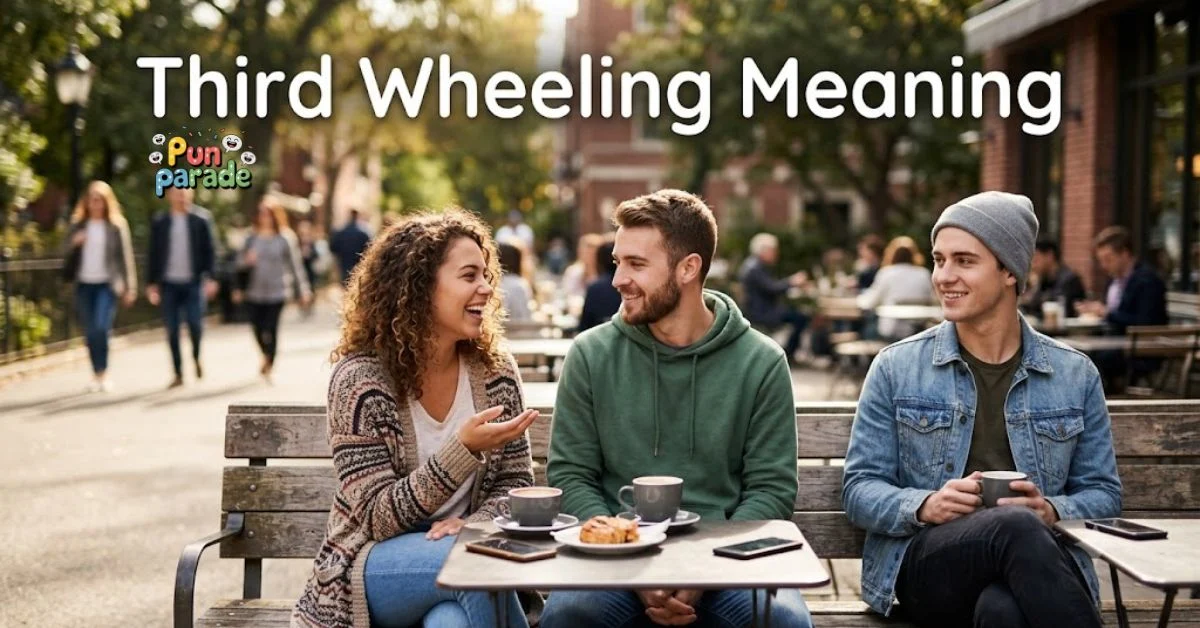
Have you ever been invited to hang out with two people who seem completely focused on each other? Maybe you’ve felt awkward, left out, or like you didn’t quite belong. That’s exactly the situation people describe when they talk about third wheeling.
The phrase has become increasingly popular across social media, text messages, and everyday conversations. Whether someone jokes about being the “third wheel” on Instagram or shares a funny TikTok about tagging along with a couple, the meaning remains familiar to people of all ages.
Still, many people wonder whether third wheeling is always a bad thing, if it’s offensive, or whether it simply describes a common social situation. This guide explains the meaning, origin, emotional impact, and real-life use of the phrase so you can understand it with confidence.
Third Wheeling Meaning – Quick Meaning
Third wheeling means being the extra person when two other people—usually a romantic couple—are spending time together. The third person often feels left out because the other two naturally focus on each other.
Quick definition
- Being the only single person with a couple.
- Feeling excluded during social activities.
- Joining two close friends or partners who share most of the conversation.
- Sometimes used humorously rather than negatively.
Examples
“I felt like I was third wheeling during their date.”
“Don’t worry, you’re not third wheeling—we wanted you here.”
“Looks like I’m the professional third wheel again!”
Origin & Background
The phrase third wheel comes from the idea that a vehicle only needs two wheels (or four in modern vehicles). An unnecessary extra wheel doesn’t contribute to movement, making it a metaphor for someone who feels unnecessary in a social setting.
Over time, the phrase became common in English-speaking countries before spreading worldwide through movies, television, and online culture.
Social media helped popularize the expression even more. TikTok creators often post humorous videos showing awkward moments while sitting between couples, while Instagram captions jokingly celebrate “third wheel energy.”
Today, the phrase isn’t always negative. Many friend groups proudly embrace the role, especially when everyone enjoys each other’s company.
Real-Life Conversations
Person A: Are you coming to dinner tonight?
Person B: Isn’t it just you and Sarah?
Person A: Yeah, but we’d love for you to come.
Person B: Okay… hopefully I’m not third wheeling!
Instagram DMs
Person A: Your vacation pictures looked amazing.
Person B: Thanks! Poor Jake spent the whole trip third wheeling us.
Person A: At least he got free food and great views!
TikTok Comments
Person A: This is literally me whenever my best friend brings her boyfriend.
Person B: Same! I’ve accepted my third wheel lifestyle.
Text Messages
Person A: Movie tonight?
Person B: Sure! Who’s going?
Person A: Me and Emma.
Person B: Guess I’ll be the third wheel again.
Related Posts: KMS Meaning: What It Means in Chat, TikTok, Texts, and When You Should Take It Seriously
Emotional & Psychological Meaning
Third wheeling isn’t just about numbers—it’s about how someone feels during an interaction.
When people say they’re third wheeling, they often express feelings like:
- Being overlooked
- Feeling disconnected
- Social awkwardness
- Mild loneliness
- Self-consciousness
However, these emotions depend on the group dynamic. Some couples make an effort to include everyone, while others unintentionally focus only on each other.
I remember attending a friend’s birthday dinner where two guests had recently started dating. They spent most of the evening talking only to each other. Nobody intended to exclude anyone, but several friends quietly admitted afterward that they felt like third wheels. It showed how small behaviors can affect group comfort without anyone realizing it.
Usage in Different Contexts
Social Media
People often use the phrase humorously in captions, memes, and videos.
Example:
“Another weekend, another third wheel adventure.”
Friends & Relationships
The phrase most commonly appears when one friend joins a romantic couple.
It can also describe friendship groups where two people have become much closer than everyone else.
Work or Professional Settings
Avoid using “third wheeling” in formal meetings or business communication.
Instead, say:
- Feeling left out
- Not included
- Outside the discussion
These alternatives sound more professional.
Casual vs Serious Tone
Casually, the phrase is playful and funny.
In serious conversations, it may describe genuine feelings of exclusion and deserves thoughtful discussion.
When NOT to Use It
Avoid using the phrase when:
- Someone is genuinely experiencing loneliness.
- Discussing workplace conflicts.
- Speaking in formal presentations.
- Referring to cultural or family gatherings where inclusion is important.
- Making jokes that might embarrass someone publicly.
Not everyone interprets the phrase as harmless humor.
Common Misunderstandings
Many people misunderstand third wheeling.
Myth 1: It always means you’re unwanted.
Not true. Many couples genuinely enjoy including friends.
Myth 2: It’s only about dating.
Wrong. Friends, siblings, coworkers, and classmates can all experience similar situations.
Myth 3: It always feels awkward.
Some people actually enjoy tagging along and don’t mind being the third wheel.
Myth 4: The couple is intentionally rude.
Often, people simply become absorbed in conversation without noticing.
Comparison Table
| Expression | Meaning | Typical Tone |
|---|---|---|
| Third wheeling | Feeling like the extra person | Playful or awkward |
| Feeling left out | Emotionally excluded | Serious |
| Tagging along | Joining others casually | Neutral |
| Hanging out | Spending time together | Positive |
| Being included | Feeling welcomed | Positive |
| Odd one out | Different from everyone else | Negative |
Key Insight
Third wheeling describes a social position rather than a person’s value. Whether it feels uncomfortable depends far more on how everyone treats each other than on the number of people involved.
See Also: OTW Meaning in Text: What It Really Means in Chats, Social Media, and Everyday Conversations
Variations and Related Expressions
1. Third wheel
The most common version describing the extra person.
2. Professional third wheel
Someone who jokes about always ending up with couples.
3. Permanent third wheel
Used humorously by people who frequently experience it.
4. Fifth wheel
Feeling unnecessary within a larger group.
5. Tagging along
Joining others without being the main planner.
6. Feeling left out
Expresses emotional exclusion.
7. Odd one out
Being different from everyone else.
8. Extra person
A casual description of someone joining a pair.
9. Couple’s sidekick
A humorous way to describe the situation.
10. Third-wheel energy
Popular online phrase describing awkward but funny social moments.
How to Respond When Someone Uses It
Casual Replies
- “You’re always welcome.”
- “We’re glad you’re here.”
- “It wouldn’t be the same without you.”
Funny Replies
- “Every superhero team needs a third member.”
- “Someone has to take the group photos.”
- “You’re our VIP guest.”
Mature Replies
- “Let us know if you ever feel left out.”
- “We’ll make sure everyone stays involved.”
Respectful Replies
- “We appreciate you spending time with us.”
- “Thanks for joining—we’re happy you’re here.”
Regional & Cultural Usage
Western Culture
The phrase is widely recognized and often used humorously among friends and couples.
Asian Culture
People may understand the idea but express it less directly, often choosing more polite wording.
Middle Eastern Culture
Group gatherings are generally inclusive, so openly calling someone a third wheel is less common.
Global Internet Usage
TikTok, Instagram, YouTube Shorts, and memes have made the phrase familiar worldwide, even among non-native English speakers.
Gen Z vs Millennials
Gen Z often uses it jokingly with memes and videos.
Millennials tend to use it in everyday conversation or while sharing relatable relationship stories.
Is It Safe for Kids?
Yes. The phrase itself is harmless and simply describes a social situation. However, parents and teachers can use it as an opportunity to discuss inclusion, empathy, and making sure no one feels left out in group activities.
Frequently Asked Questions
What does third wheeling mean?
It means being the extra person with two people who share a closer relationship, often a romantic couple.
Is being a third wheel always awkward?
No. Many people enjoy spending time with couples when everyone makes an effort to include each other.
Is third wheel a negative phrase?
Not always. It can be humorous, affectionate, or describe a genuine feeling of exclusion.
Can friends be third wheels?
Yes. The phrase can apply whenever one person feels outside a close pair, even if romance isn’t involved.
Why do people joke about third wheeling?
Because it’s a common experience that many people find relatable, especially on social media.
Is it rude to call someone a third wheel?
It depends on the situation. Among close friends it may be funny, but if someone already feels excluded, it could hurt their feelings.
How can couples avoid making someone feel like a third wheel?
Include everyone in conversations, choose group-friendly activities, and make sure each person feels valued.
What does it mean to be third wheeling someone?
It means being the extra person spending time with two people who are much closer, often a romantic couple. The third person may feel left out, awkward, or simply like they’re tagging along.
What is a 3 wheel in a relationship?
A “third wheel” in a relationship is someone who joins a couple and may feel less involved than the partners. The term is usually lighthearted but can also describe genuine feelings of exclusion.
What is fifth wheeling?
Fifth wheeling means feeling like the unnecessary extra person in a larger group, such as two couples plus one individual. It’s similar to third wheeling but happens in groups of five or more people.
Why is it called a 3rd wheel?
The phrase comes from the idea of an extra wheel that isn’t needed, making it a metaphor for an unnecessary or overlooked person. Today, it’s commonly used as playful slang for someone accompanying a couple or close pair.
Conclusion
Third wheeling is more than just internet slang—it’s a phrase that captures a familiar social experience. While it often describes being the extra person alongside a couple, it doesn’t have to be uncomfortable or negative. A welcoming attitude and thoughtful conversation can turn an awkward moment into an enjoyable one for everyone involved.
Understanding the meaning helps you recognize the difference between playful jokes and genuine feelings of exclusion. Whether you’re the third wheel or part of the pair, small acts of inclusion can make every gathering feel more comfortable and memorable.
