
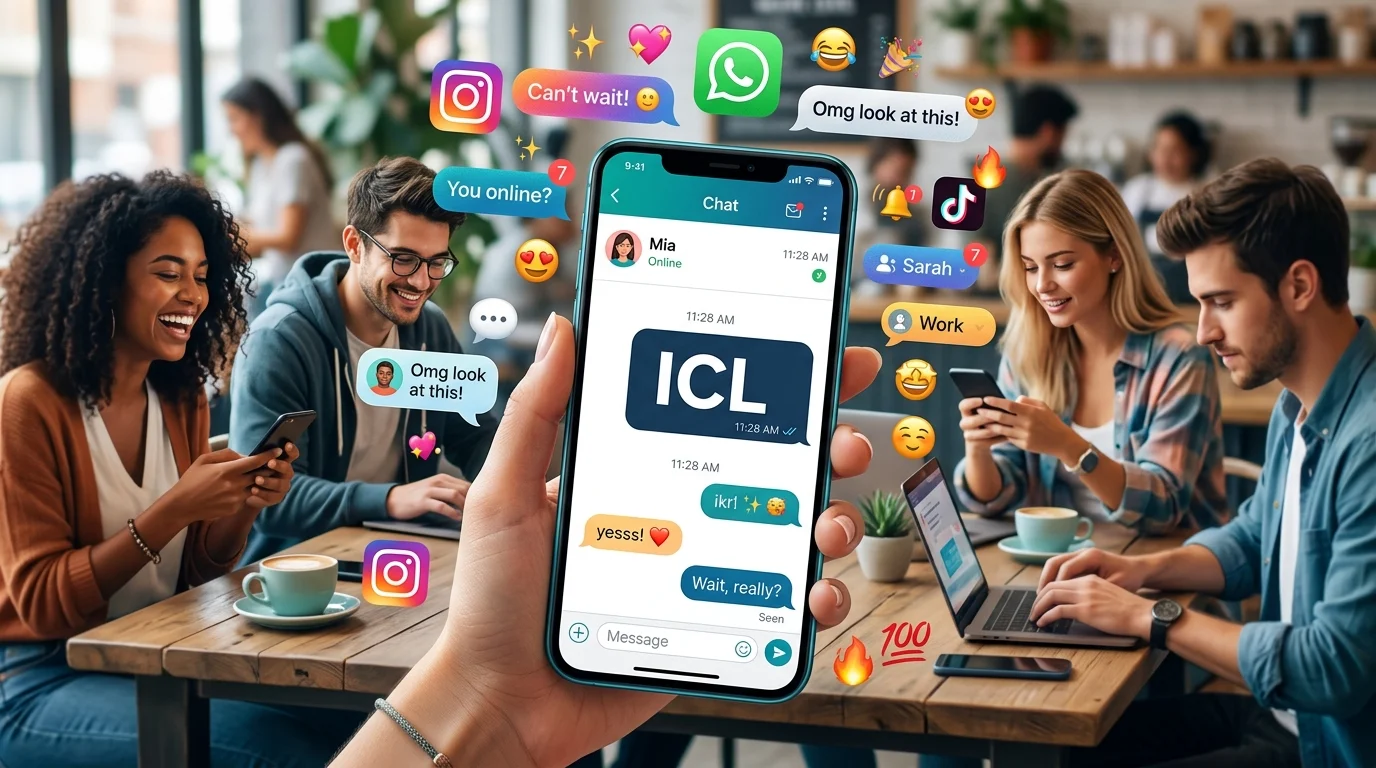
If you’ve spent any time scrolling through TikTok comments, Instagram DMs, Snapchat messages, or text conversations lately, you’ve probably come across the term ICL. At first glance, it can look confusing because internet slang evolves quickly, and new abbreviations seem to appear every month.
Many people search for “What Does ICL Mean?” because they see it used in conversations where someone is expressing a strong opinion, sharing a personal truth, or emphasizing sincerity. Without context, it can be difficult to understand exactly what the sender means.
The good news is that ICL is actually quite simple once you know its purpose. It has become a popular expression among younger internet users, particularly Gen Z, because it helps people add honesty and emotional emphasis to what they are saying.
In this guide, you’ll learn the true meaning of ICL, where it came from, how people use it in real conversations, when to avoid it, and how it compares to other popular slang terms.
What Does ICL Mean? – Quick Meaning
ICL stands for “I Can’t Lie.”
People use it when they want to emphasize that they are being honest, genuine, or completely truthful about something.
Simple ICL Definition
- ICL = I Can’t Lie
- Used to show honesty or sincerity
- Often appears before an opinion or confession
- Common on TikTok, Instagram, Snapchat, and texting apps
Example Quotes
“ICL, that movie was way better than I expected.”
“ICL, I’m still thinking about our conversation.”
“ICL, this might be the best food I’ve had all year.”
In each example, the speaker is signaling that they are expressing a genuine thought or feeling.
See Also: IYKYK Meaning: What It Really Means, Where It Came From, and How to Use It Correctly
Origin & Background
Like many internet abbreviations, ICL emerged from online communication where speed and brevity matter. Instead of typing “I can’t lie,” users shortened the phrase to three simple letters.
The expression became increasingly visible through:
- TikTok videos
- Instagram comments
- Snapchat conversations
- Twitter/X posts
- Online gaming communities
While the phrase “I can’t lie” has existed in spoken English for decades, its abbreviated form gained momentum as younger users looked for quicker ways to communicate authenticity online.
Social media platforms accelerated its growth because short-form communication rewards concise expressions. Much like “TBH” (To Be Honest), ICL became a fast way to signal honesty.
Today, it is recognized as one of the most common conversational slang terms among Gen Z users in the United States and many other English-speaking regions.
The Real ICL Meaning in Text Messages
When used in text messages, ICL usually serves one purpose: it prepares the reader for a genuine opinion.
People often use it before:
- Compliments
- Confessions
- Criticism
- Emotional statements
- Unexpected opinions
For example:
“ICL, I was nervous before meeting everyone.”
Here, the sender is revealing something personal.
Another example:
“ICL, your advice actually helped me.”
This signals appreciation and honesty.
The phrase acts almost like a social cue that says:
“What I’m about to say is sincere.”
See Also: 1437 Meaning: The Hidden Love Code Behind “I Love You Forever”
Real-Life Conversations
WhatsApp Conversation
Person A: Did you enjoy the trip?
Person B: ICL, it was one of the best weekends I’ve had in years.
Person A: Really?
Person B: Yeah, I needed that break more than I realized.
Instagram DM
Person A: Be honest, do you like the new haircut?
Person B: ICL, it suits you way better than the old one.
Person A: That’s good to hear.
TikTok Comments
Creator: Should I make a part two?
Commenter: ICL, this is the first video I’ve watched all the way through.
Creator: That’s actually a huge compliment.
Text Message
Person A: Are you still upset?
Person B: ICL, a little bit.
Person A: Thanks for being honest.
Person B: I’d rather tell you how I really feel.
Emotional & Psychological Meaning
One reason ICL became so popular is that people crave authenticity.
Online communication often lacks facial expressions, tone of voice, and body language. Because of this, users look for ways to signal sincerity.
ICL helps fill that gap.
When someone says “ICL,” they are often expressing:
- Honesty
- Vulnerability
- Openness
- Emotional transparency
- Genuine opinion
In many cases, the phrase creates trust because it tells the listener that the speaker is not hiding their true thoughts.
Imagine a friend texting:
“ICL, I’ve been feeling overwhelmed lately.”
Without ICL, the sentence might still feel honest. But adding those three letters makes the statement feel more personal and heartfelt.
That emotional layer is one reason the phrase continues to grow in popularity.
See Also: What Does CFS Mean in Slang? The Internet Phrase That Confuses Almost Everyone
Usage in Different Contexts
Social Media
ICL is extremely common on TikTok, Instagram, Snapchat, and X.
Examples:
- “ICL, this trend is getting old.”
- “ICL, this song is addictive.”
Friends and Relationships
Among friends, ICL often introduces honest feelings.
Examples:
- “ICL, I missed hanging out with you.”
- “ICL, that joke hurt my feelings.”
Work or Professional Settings
ICL is generally not recommended in professional communication.
Instead of saying:
“ICL, this proposal needs work.”
A professional alternative would be:
“To be honest, I think this proposal could be improved.”
Casual vs Serious Tone
ICL works in both casual and serious situations.
Casual:
- “ICL, that pizza was amazing.”
Serious:
- “ICL, I’m struggling right now.”
The emotional weight depends entirely on context.
When NOT to Use It
Although ICL is widely understood among younger audiences, there are situations where it may not be appropriate.
Professional Communication
Avoid it in:
- Job applications
- Business emails
- Client meetings
- Academic papers
Formal Situations
Not everyone recognizes internet slang.
Using ICL in formal settings may create confusion.
Sensitive Conversations
Some people may interpret slang as too casual during serious discussions involving:
- Grief
- Medical issues
- Legal matters
- Workplace conflicts
In these cases, direct language often works better.
Common Misunderstandings
People Think It Means Something Else
Because many internet acronyms have multiple meanings, some users assume ICL refers to a company, organization, or technical term.
Context usually clarifies its intended meaning.
Tone Confusion
ICL can sound:
- Serious
- Funny
- Sarcastic
- Emotional
The surrounding message determines the tone.
Literal vs Figurative Use
Most users don’t mean they are incapable of lying.
Instead, they’re emphasizing honesty at that moment.
ICL vs Similar Slang Acronyms
| Expression | Meaning | Usage |
|---|---|---|
| ICL | I Can’t Lie | Honest opinion |
| TBH | To Be Honest | Direct truth |
| NGL | Not Gonna Lie | Honest admission |
| FR | For Real | Agreement or emphasis |
| IMO | In My Opinion | Personal viewpoint |
| IDK | I Don’t Know | Uncertainty |
| Cap | Lie or exaggeration | Opposite concept |
| No Cap | No lie, truthful | Similar meaning |
Key Insight
ICL, NGL, and TBH all communicate honesty, but ICL often feels slightly more conversational and emotionally expressive. It tends to appear when someone wants their sincerity to stand out.
Variations and Related Expressions
NGL
Not Gonna Lie.
TBH
To Be Honest.
No Cap
Means truthful or genuine.
FR
For Real.
Honestly
The traditional non-slang version.
Real Talk
Signals a serious conversation.
Low-Key
Expresses something subtle or understated.
High-Key
Expresses something openly and strongly.
Deadass
A serious or truthful statement.
On God
Used to emphasize sincerity or truthfulness.
How to Respond When Someone Uses ICL
Casual Replies
- “Fair enough.”
- “I get what you mean.”
- “That’s valid.”
Funny Replies
- “Thanks for not lying then.”
- “Honesty level: unlocked.”
- “Appreciate the truth bomb.”
Mature Replies
- “I appreciate your honesty.”
- “Thank you for sharing that.”
- “That’s a fair perspective.”
Respectful Replies
- “I understand where you’re coming from.”
- “Your honesty means a lot.”
- “Thanks for being open with me.”
Regional & Cultural Usage
Western Culture
In the United States, Canada, and the United Kingdom, ICL is strongly associated with Gen Z internet culture.
Asian Culture
English-speaking social media users in countries across Asia increasingly recognize ICL through TikTok and global online trends.
Middle Eastern Culture
Among younger bilingual users, ICL appears frequently in English-language online conversations.
Global Internet Usage
The internet has transformed slang into a global phenomenon. Many users understand ICL even if English is not their first language.
Gen Z vs Millennials
Gen Z
- Uses ICL frequently
- Comfortable with internet abbreviations
- Integrates slang into daily texting
Millennials
- More likely to use TBH
- May recognize ICL but use it less often
This generational difference reflects changing communication habits.
Is It Safe for Kids?
Yes, ICL is generally considered safe for children and teenagers.
The phrase simply means “I Can’t Lie” and does not contain offensive language or inappropriate content.
However, parents should remember that online slang evolves quickly. Understanding the context remains important because meaning can vary depending on the conversation.
FAQs
What does ICL mean in texting?
ICL means “I Can’t Lie.” It is used to introduce an honest opinion or feeling.
What is the ICL meaning in the USA today?
In modern American internet culture, ICL primarily means “I Can’t Lie” and is commonly used by Gen Z.
Is ICL the same as TBH?
They are similar because both express honesty, but ICL often sounds more conversational.
Is ICL positive or negative?
It can be either. The meaning depends on the statement that follows.
Why is ICL popular on TikTok?
TikTok encourages short, fast communication, making abbreviations like ICL easy to use and understand.
Can adults use ICL?
Absolutely. Anyone can use it, although it is most common among younger internet users.
Does ICL always mean honesty?
Most of the time, yes. However, context and tone still matter.
Conclusion
Understanding what ICL means is easier once you recognize its purpose. At its core, ICL stands for “I Can’t Lie,” a simple phrase people use to emphasize honesty, sincerity, and genuine emotion.
Its popularity reflects a larger shift in digital communication. People want quick ways to express authenticity, and ICL does exactly that. Whether it’s used in a TikTok comment, a text message, or an Instagram DM, the phrase helps speakers signal that they’re sharing a real opinion or feeling.
Like all internet slang, context matters. Used appropriately, ICL can make conversations feel more personal, relatable, and sincere.
The next time you see someone write “ICL,” you’ll know they’re probably about to tell you exactly what they think—and that’s what makes the phrase so powerful.
