
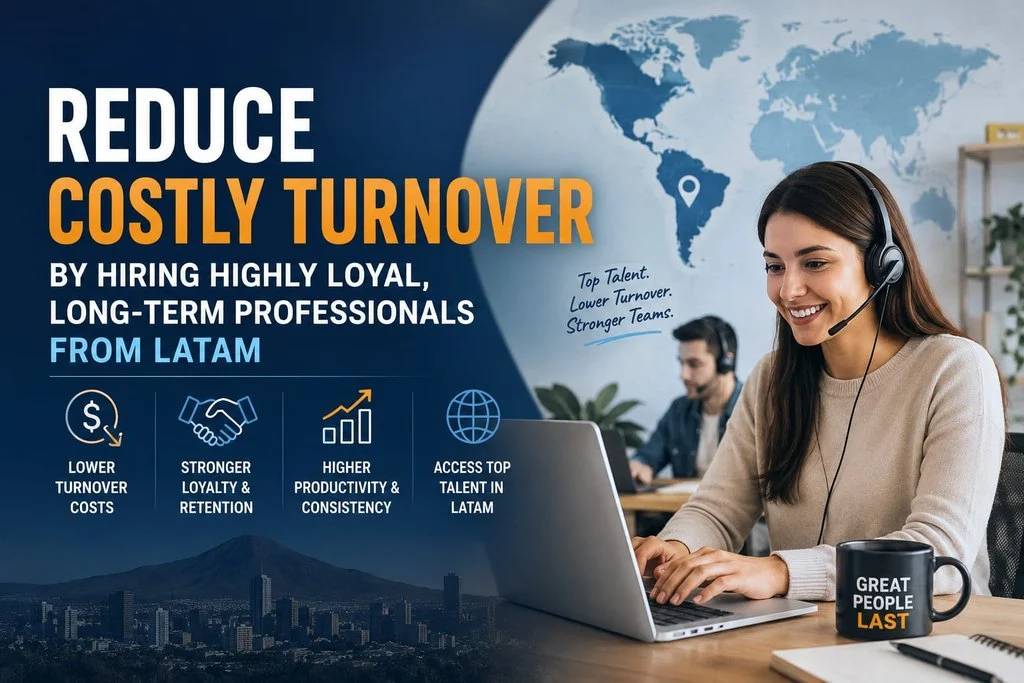
Employee turnover creates costs that extend beyond recruiting and replacing someone. Businesses also lose productivity, institutional knowledge, team stability, and time when experienced employees leave. For companies building remote teams, choosing professionals who are committed to long-term roles is essential for sustainable growth.
Latin America has become an attractive talent market for companies seeking skilled remote professionals. With the right recruitment process, businesses can access qualified candidates who are interested in stable, long-term opportunities while keeping hiring costs under control.
Understand the Real Cost of Employee Turnover
Replacing an employee involves more than paying for a new job advertisement. Companies often spend money on recruitment, interviews, onboarding, training, and management time before a new employee becomes fully productive.
Turnover also affects existing employees. When someone leaves, their responsibilities often shift to colleagues, increasing workloads and potentially creating additional dissatisfaction. If turnover continues, team performance suffers.
Hiring people who want long-term employment reduces these disruptions. The focus should be on finding candidates whose professional goals align with the company’s expectations.
Look Beyond Skills When Hiring Remote Professionals
Technical ability is important, but it does not determine whether someone will remain with a company. A strong recruitment process should also evaluate motivation, communication, career goals, work preferences, and expectations about the role.
During interviews, recruiters should ask candidates about their previous employment history and reasons for changing jobs. Frequent unexplained job changes can indicate a potential retention concern, although career progression and contract-based work also need to be considered.
Understanding what candidates want from their next position helps employers identify professionals looking for stability rather than short-term employment.
Why LATAM Offers a Strong Remote Talent Pool
Latin America provides businesses with access to professionals across technology, customer support, finance, marketing, design, administration, and other fields. Many professionals in the region already have experience working with international companies and distributed teams.
Time-zone compatibility is another practical advantage for companies in North America. Overlapping working hours make communication easier and support collaboration without requiring employees to work inconvenient schedules.
Employers also gain access to a broader talent pool instead of limiting recruitment to their local market.
Prioritize Long-Term Compatibility
Reducing turnover starts before an employee receives an offer. Recruiters should understand the employer’s working environment, management style, compensation structure, responsibilities, and expectations before searching for candidates.
These details help match professionals with companies where they are more likely to succeed.
For example, a candidate who prefers structured processes might struggle in a rapidly changing startup environment. Similarly, someone seeking career development might leave if the role offers no clear path for growth.
Recruitment based on compatibility reduces the risk of placing a qualified person in a position that does not match their expectations.
Set Clear Expectations From the Start
Miscommunication during hiring often leads to dissatisfaction after onboarding. Employers should clearly explain working hours, responsibilities, compensation, performance expectations, communication channels, and advancement opportunities.
Remote employees also need clarity about how their performance will be evaluated. Clear expectations help both sides understand the employment relationship before accepting an offer.
Recruiters play an important role by communicating these details accurately instead of presenting an overly attractive version of the position.
Build Trust With Remote Employees
Retention depends heavily on the employee experience after hiring. Managers should maintain regular communication, recognize strong performance, provide useful feedback, and address problems before they become serious.
Remote professionals need the same sense of connection and support as office-based employees. Regular one-on-one meetings, team communication, professional development, and clear goals help employees remain engaged.
Hiring the right person is only the first step. Companies also need an environment where skilled professionals have a reason to stay.
Work With a Recruitment Partner
Finding reliable long-term talent requires time and a structured recruitment process. Businesses that lack internal recruiting resources often benefit from working with a specialized talent acquisition partner.
A recruitment partner can help define the role, source candidates, conduct initial screening, evaluate experience, and present professionals who match the company’s requirements. This approach reduces the workload for internal teams while improving access to talent outside the local market.
Reduce Turnover Through Better Hiring Decisions
Employee turnover is often treated as an unavoidable cost of doing business, but poor hiring decisions frequently contribute to the problem. Hiring based solely on technical skills or filling a vacancy quickly increases the risk of a poor match.
A better approach evaluates skills, experience, motivation, communication, career goals, and long-term expectations. Latin America offers businesses a broad pool of professionals who are experienced in remote work and interested in international career opportunities.
By combining careful candidate screening with clear job expectations and strong employee support, companies can build remote teams with greater stability. The result is lower replacement costs, less disruption, stronger team continuity, and a workforce built for long-term growth.
