
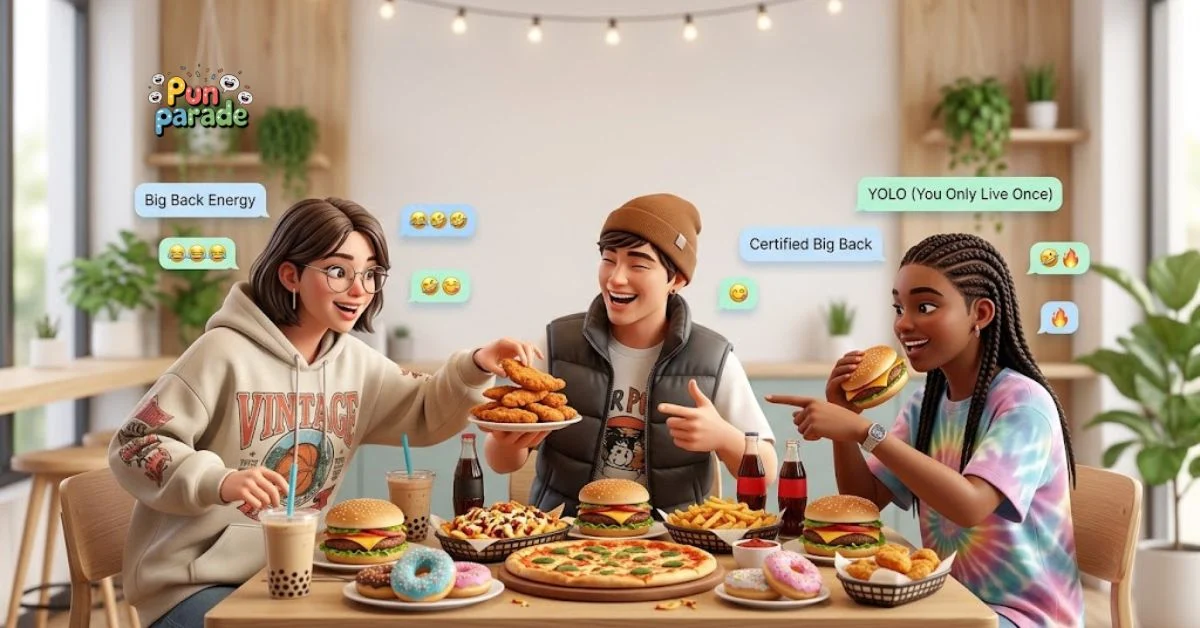
If you’ve spent time on TikTok, Instagram Reels, or in a group chat recently, you’ve probably seen someone called a “big back.” Maybe it was under a funny food video, a meme, or a friend’s post about ordering an extra meal. At first glance, the phrase can sound confusing—or even insulting.
So, what does big back meaning actually refer to?
The answer depends on the context. In most cases, “big back” is a humorous Gen Z slang term used to tease someone for loving food, eating large portions, or always being hungry. It’s often meant as playful banter rather than a serious insult, although tone and relationship matter a lot.
In this guide, you’ll learn where the phrase came from, how TikTok made it popular, when it’s funny, when it crosses the line, and how to respond if someone calls you a “big back.”
Big Back Meaning – Quick Meaning
Big back is a slang expression that jokingly describes someone who:
- Loves eating or is always thinking about food.
- Eats large portions without shame.
- Is caught snacking constantly.
- Appears unusually excited about meals.
It doesn’t literally refer to someone’s back in most online conversations. Instead, it’s used as an exaggerated joke about having a huge appetite.
Quick examples
“Bro finished two burgers? Big back energy.”
“Every time snacks appear, she becomes a certified big back.”
“Don’t call me a big back just because I ordered dessert!”
Although many people use it jokingly among friends, others may find it offensive if it’s directed at their body or weight. Context always matters.
Origin & Background
The phrase “big back” didn’t begin as a formal slang word. It evolved through internet humor, especially on platforms where exaggeration and playful roasting are common.
Originally, the expression was used as a joke suggesting that someone who constantly eats must have a “big back” to support their appetite. The idea is intentionally ridiculous, which is part of what makes it funny in meme culture.
As short-form videos exploded, creators started commenting “big back” whenever someone posted:
- Massive food challenges
- Mukbang videos
- Late-night snack clips
- Restaurant reviews
- Funny eating compilations
Soon, the phrase spread beyond food content. Friends began using it in comments, text messages, and memes whenever someone showed excitement about eating.
Today, TikTok has turned “big back” into one of the internet’s most recognizable food-related jokes. Many users don’t even associate it with body size anymore—they simply use it as shorthand for “someone who loves food.”
Like many Gen Z expressions, its meaning has softened through repeated humorous use. Still, because it can relate to eating habits or appearance, it’s important to know your audience before saying it.
Related Posts: Goodbye That Rhyme: Creative Rhymes, Funny Lines & Meaning Explained
Real-Life Conversations
Person A: Who ate the last slice of pizza?
Person B: Don’t look at me…
Person A: We all know it was you, big back.
Person B: I regret nothing.
Instagram DMs
Person A: You already ordered fries?
Person B: And mozzarella sticks.
Person A: Certified big back behavior.
Person B: I’m living my best life.
TikTok Comments
Creator: “POV: You came for one cookie and left with twelve.”
Commenter 1: Big back season.
Commenter 2: That’s literally me every weekend.
Commenter 3: No regrets.
Text Messages
Person A: Want to grab lunch?
Person B: I already ate.
Person A: Okay.
Person B: But I’m still hungry.
Person A: Absolute big back.
Person B: Fair enough.
Emotional & Psychological Meaning
On the surface, “big back” is simply a joke about food. But its popularity reflects something deeper about how younger generations communicate online.
Gen Z often uses exaggerated humor to create connection. Instead of saying, “You really like food,” they’ll exaggerate the situation with a playful nickname like “big back.”
The phrase can express:
- Affection between close friends
- Shared love of food
- Self-deprecating humor
- Playful teasing
- Internet-style sarcasm
In many friend groups, calling yourself a “big back” is actually a way of laughing at your own eating habits before someone else does.
A personal-style scenario
Imagine you’ve had a stressful week at work. Friday night arrives, and you order your favorite burger, fries, milkshake, and dessert. Before anyone else comments, you post a picture with the caption:
“Big back activities tonight.”
Instead of inviting criticism, you’re showing confidence, humor, and self-awareness. Friends understand you’re joking about treating yourself, not making a serious statement about your body.
That’s one reason the phrase has become so popular—it turns an everyday moment into a shared internet joke while helping people bond through humor.
Usage in Different Contexts
The meaning of big back changes depending on where and how it’s used. In one situation, it’s harmless humor. In another, it can come across as rude or insensitive.
1. Social Media
TikTok, Instagram, and X are where you’ll see the phrase most often. People use it in comments on food videos, buffet challenges, cooking tutorials, or posts showing oversized meals.
Example:
- “You ordered three desserts? Big back behavior.”
- “The snack drawer didn’t stand a chance.”
Here, it’s usually meant to make people laugh rather than criticize.
2. Friends & Relationships
Close friends often use big back as playful teasing. Couples may also joke about it after a date night or while sharing food.
Example:
- “You said you weren’t hungry, then finished my fries. Big back.”
Among people who know each other well, it’s often received as lighthearted banter.
3. Work or Professional Settings
This slang doesn’t belong in professional communication.
Calling a coworker or client a big back could sound disrespectful or even be interpreted as body-shaming.
Instead, stick with neutral language in workplaces.
4. Casual vs. Serious Tone
The same phrase can have completely different meanings depending on tone.
Casual:
- “You’re a big back for buying snacks before dinner.”
Serious or Mean-Spirited:
- Using it to mock someone’s weight or eating habits.
The difference isn’t the words—it’s the intention behind them.
When NOT to Use It
Although many people treat big back as harmless internet slang, there are situations where it’s best avoided.
Don’t use it:
- Around someone who is sensitive about their body or weight.
- To insult someone’s appearance.
- During serious conversations about health.
- In schools or workplaces where it may seem unprofessional.
- With strangers who may not understand the joke.
- If the person has asked you not to make comments about food or eating.
Humor should make everyone feel included—not embarrassed.
Common Misunderstandings
Many people misunderstand big back because they take it literally.
Misunderstanding 1: It always means someone is overweigh’t.
Not necessarily.
Online, it’s often aimed at someone’s enthusiasm for food rather than their physical appearance.
Misunderstanding 2: It’s always an insult.
In many friend groups, it’s actually a joke or even a compliment about enjoying good food.
Misunderstanding 3: Everyone finds it funny.
Some people laugh, while others see it as body-shaming.
Knowing your audience makes all the difference.
Misunderstanding 4: It only appears on TikTok.
While TikTok helped popularize it, you’ll now find it on Instagram, Snapchat, YouTube, Discord, and in everyday text messages.
See Also: Thank You for Your Patience: Meaning, Professional Use, and Better Alternatives
Comparison Table
| Expression | Meaning | Tone | Typical Use |
|---|---|---|---|
| Big Back | Loves food or eats a lot | Funny, playful | Food jokes and memes |
| Foodie | Someone who enjoys trying food | Positive | Restaurants, travel, cooking |
| Hungry Hippo | Constantly hungry | Silly | Friendly teasing |
| Glutton | Eats excessively | Negative | Formal or critical language |
| Snack Monster | Always looking for snacks | Humorous | Friends and family |
| Health Nut | Focused on healthy eating | Positive | Lifestyle discussions |
Key Insight
Unlike words such as glutton, big back is usually driven by internet humor rather than criticism. Even so, it’s important to remember that not everyone interprets it the same way. Friendly intent doesn’t always guarantee a friendly reaction.
Variations and Related Types
Here are some common variations you’ll see online.
1. Big Back Energy
Describes someone acting like they can’t resist food or snacks.
2. Certified Big Back
A stronger, funnier version suggesting someone has earned the title.
3. Big Back Activities
Refers to eating a large meal or indulging in comfort food.
4. Big Back Behavior
Used when someone makes food their top priority.
5. Big Back Era
A humorous way to describe a phase of enjoying lots of food.
6. Big Back Moment
A single funny incident involving overeating or snack obsession.
7. Professional Big Back
A joke implying someone is an expert at eating.
8. Weekend Big Back
Refers to relaxing and enjoying favorite foods after a busy week.
9. Big Back Mode
Describes switching into a mindset where all you want is food.
10. Recovering Big Back
A self-deprecating joke after deciding to eat healthier following a period of overindulgence.
How to Respond When Someone Uses “Big Back”
Your response depends on the tone and your relationship with the other person. If it’s clearly a joke between friends, you can play along. If it feels disrespectful, it’s okay to set a boundary.
Casual Replies
- “You already know!”
- “Food is my love language.”
- “No shame here.”
- “I’m just enjoying life.”
- “Worth every bite.”
Funny Replies
- “Call me the CEO of snacks.”
- “I take my eating career seriously.”
- “That’s premium big back behavior.”
- “Someone has to support the food industry.”
- “I’m training for the buffet Olympics.”
Mature Replies
- “Let’s keep the jokes respectful.”
- “I’d rather not joke about people’s eating habits.”
- “I’m just enjoying my meal.”
- “There’s nothing wrong with liking good food.”
Respectful Replies
- “Haha, maybe a little.”
- “Everyone deserves a treat sometimes.”
- “Good food makes life better.”
- “I’ll take that as a compliment.”
Regional & Cultural Usage
Like many internet slang terms, big back isn’t understood the same way everywhere. Cultural attitudes toward humor, food, and body image shape how people interpret it.
Western Culture
In countries like the United States, Canada, and the UK, big back is mostly associated with meme culture and TikTok humor.
Many people use it to joke about ordering extra food, loving snacks, or enjoying cheat meals. Among close friends, it’s often viewed as harmless teasing.
However, awareness of body positivity has also made some users more cautious. If the joke targets someone’s appearance instead of their appetite, it can quickly be seen as offensive.
Asian Culture
Across many Asian countries, the phrase isn’t widely used in everyday conversation, but younger internet users recognize it through English-language social media.
Some people simply understand it as a funny meme, while others may take it literally because the slang doesn’t have the same cultural background.
Middle Eastern Culture
In many Middle Eastern communities, English internet slang spreads through TikTok, Instagram, and gaming platforms.
Young users may use big back jokingly with friends, but in family or formal settings, comments about someone’s body or eating habits are generally considered impolite.
Global Internet Usage
Online, the phrase has become less about physical appearance and more about food-related humor.
People use it under videos featuring:
- Huge restaurant meals
- Late-night snack runs
- Mukbang content
- Grocery hauls
- Food review videos
Its meaning is often understood instantly by regular social media users, regardless of country.
Gen Z vs. Millennials
Gen Z
Gen Z popularized big back through memes and short-form videos. They often use it ironically or even about themselves.
Example:
“I’m entering my big back era.”
Millennials
Many Millennials understand the joke but may not use it as frequently.
Some interpret it more literally, making them more likely to view it as a comment about body size rather than internet humor.
Read More: KK Meaning in Chat: What It Really Means in Texting, WhatsApp & Social Media
Is It Safe for Kids?
Generally, big back isn’t considered offensive profanity. However, it isn’t always the best phrase for children to repeat.
Because it can be interpreted as teasing someone’s eating habits or appearance, parents and teachers should encourage kindness and explain that jokes about bodies can hurt feelings.
When used among friends who understand the humor, it’s usually harmless. But children may not recognize when a joke becomes hurtful.
Frequently Asked Questions
What does big back mean in Gen Z slang?
It usually describes someone who loves food or eats a lot in a playful, exaggerated way. It’s commonly used as a joke among friends and on TikTok.
Does big back mean someone has a big bum?
Not usually. Despite the wording, the slang rarely refers to a person’s body shape. It’s more often about a strong appetite or funny food-related behavior.
Why is big back popular on TikTok?
TikTok creators use it in memes, food videos, and humorous comment sections. Its exaggerated style fits the platform’s fast-paced comedy.
Is calling someone big back offensive?
It depends on the relationship and tone. Friends may find it funny, while others could see it as body-shaming or disrespectful.
What is the origin of big back?
The phrase grew from internet meme culture and became widely known through TikTok, where users jokingly described people with huge appetites or food obsessions.
What does big back mean in relation to food?
It humorously suggests that someone loves eating, enjoys large meals, or never says no to snacks. It’s usually not meant literally.
Can I use big back in professional conversations?
No. Because it’s informal internet slang, it’s best kept to casual chats, memes, and conversations with friends.
What does it mean if a girl has a big back?
In Gen Z slang, it usually means she loves food or has a big appetite, not necessarily that she has a large body. The meaning depends on the context and is often meant as a joke.
Why are kids calling each other big back?
Kids picked up the phrase from TikTok and memes, where it’s used to playfully tease someone for eating a lot or always wanting snacks. It should be used carefully to avoid hurting someone’s feelings.
What does “fat back” mean in slang?
“Fat back” is generally a more insulting slang term that can refer to someone being overweigh’t or eating excessively. Unlike “big back,” it is more likely to be seen as offensive.
What does “big bag” mean in slang?
“Big bag” usually refers to a large amount of money, wealth, or a major financial success. For example, “She secured the big bag” means she earned or won a lot of money.
Conclusion
The meaning of big back goes far beyond its literal words. In today’s online culture, it’s become a lighthearted way to joke about loving food, ordering one more snack, or giving in to late-night cravings. Thanks to TikTok and Gen Z humor, the phrase has evolved into a widely recognized meme that often celebrates relatable eating habits rather than criticizing them.
That said, context is everything. A joke that makes one friend laugh could make someone else feel uncomfortable. The safest approach is to use big back only with people who understand your sense of humor and know your intentions. When used thoughtfully, it’s another example of how internet slang turns everyday moments into shared laughter.
